
Mumbai Monorail Stranded in Heavy Rain: All 582 Passengers Rescued After 4 Hours

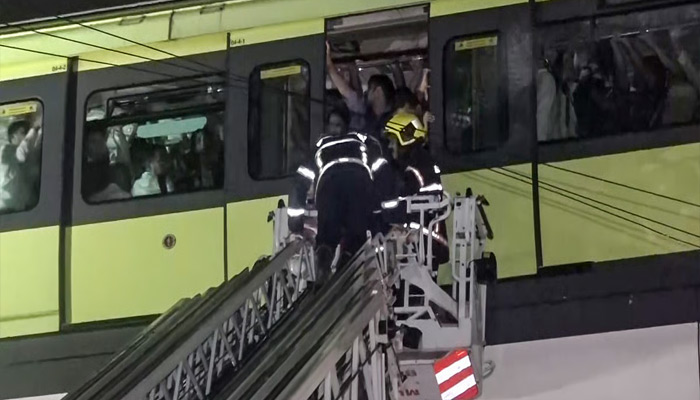
Mumbai Monorail Incident: All 582 Passengers Rescued After 4 Hours Amid Heavy Rain.
All 582 passengers trapped inside a Mumbai monorail stalled between Bhakti Park and Chembur stations due to a technical snag during heavy rainfall were safely evacuated after nearly four hours, the Mumbai Metropolitan Region Development Authority (MMRDA) said. The Brihanmumbai Municipal Corporation and the fire brigade played a key role in the rescue operation on Tuesday evening.
Incident Overview
The monorail, fully crowded with commuters, halted around 6:15 pm due to a power supply failure on its elevated track. Emergency sky ladders were deployed to rescue the stranded passengers safely.
Twelve passengers reported suffocation and breathlessness and were admitted to nearby hospitals. Officials said their condition is stable, and they are expected to be discharged soon.
One rescued passenger said, “I was on the train from 5:30 pm. The rescue operation began after an hour. There were at least 500 passengers on the train, which was overloaded as it arrived after a 30-minute gap.”
Government Response
Maharashtra Chief Minister Devendra Fadnavis confirmed he was monitoring the situation and ordered an enquiry into the incident. In a tweet, he assured the public that all passengers would be safely evacuated and requested calm.
Deputy Chief Minister Eknath Shinde explained that the Harbour Line closure due to heavy rain led to overcrowding on the monorail. The power failure triggered the emergency brakes, bringing the train to a halt. He assured that preventive measures will be taken to avoid similar incidents in the future.
About Mumbai Monorail
The Mumbai Monorail, operational since 2014, runs a 20 km route from Chembur to Sant Gadge Maharaj Chowk with major stations at Chembur, Wadala, and Sant Gadge Maharaj Chowk. Designed to strengthen the city’s public transport system, it provides a quick, convenient, and affordable travel option for daily commuters, with fares ranging from Rs 10 to Rs 40.
The successful rescue highlights effective coordination among multiple agencies and underscores the importance of safety measures in urban transit during adverse weather conditions.
Comments are closed.