
Mustafizur Rahman No-Ball Call Sparks Debate Over Cricket’s Credibility

The standoff between the Board of Control for Cricket in India (BCCI) and the Bangladesh Cricket Board (BCB) is not an aberration.
It is the latest reminder of how easily cricket yields when political pressure enters the conversation. Time and again, the sport has chosen accommodation over principle, raising an uncomfortable but necessary question: is cricket, as a global sport, governed by rules—or by political convenience?
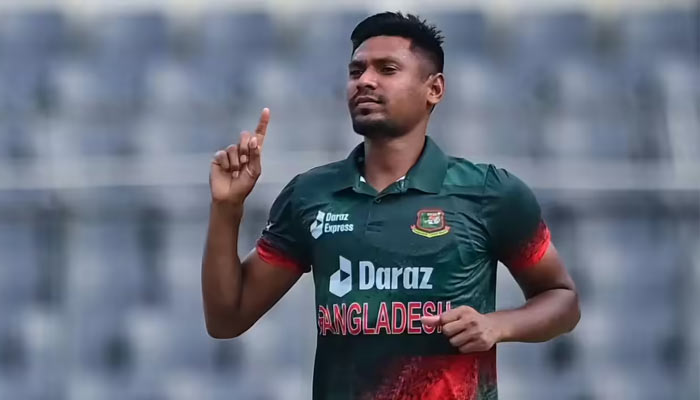
The immediate trigger was the release of Mustafizur Rahman by Kolkata Knight Riders ahead of the Indian Premier League season. Bought for ₹9.20 crore at the auction, Mustafizur’s signing complied with every IPL regulation. There was no legal, contractual, or procedural breach. Yet a routine sporting decision was swiftly politicised after right-wing groups objected to the inclusion of a Bangladeshi player, citing unrest and attacks on minorities in Bangladesh.
As the pressure mounted, KKR were compelled to release the left-arm pacer despite having done nothing wrong. The outrage was selective and retrospective. The franchise and its co-owner Shah Rukh Khan faced scrutiny not for violating rules, but for acting within them. Cricket was reduced to collateral damage.
What followed was more telling than the release itself. The BCCI and the IPL governing council offered no explanation, no acknowledgement of error, and no defence of their own framework. Seven Bangladeshi players had been cleared for the auction. Mustafizur was one of them. If Bangladeshi participation had suddenly become unacceptable, responsibility rested with administrators—not franchises forced to absorb the fallout.
The familiar comparison with Pakistan, often invoked to justify such decisions, does not withstand scrutiny. As author and Congress MP Shashi Tharoor pointed out in The Indian Express, Bangladesh is not Pakistan. It has not exported terrorism into India, nor is the diplomatic relationship comparable. Treating the two as interchangeable is not caution—it is convenience.
The damage has now spread beyond the IPL. The BCB has formally written to the International Cricket Council expressing reservations about travelling to India for the ICC Men’s T20 World Cup 2026, requesting that their matches be moved to Sri Lanka. What began as a domestic franchise issue has evolved into a breakdown of international confidence—manufactured entirely by cricket’s inability to stand by its own rules.
Cricket’s Habitual Retreat
This episode is not an exception. It is part of a broader pattern in which cricket consistently retreats when confronted by political pressure. Instead of asserting its independence, the sport repeatedly chooses silence, compromise, or delay. Over time, this erodes the idea that cricket is governed by sporting logic rather than external influence.
Other sports have faced political complexity without surrendering control. The 1995 Rugby World Cup in South Africa was staged in a nation still reeling from apartheid. Rugby, long a symbol of division, became a platform for unity—without altering competition structures or bending rules. Politics remained symbolic; sport remained intact.
Cricket rarely manages that balance.
Tournaments Shaped by Politics, Not Play
Recent tournaments illustrate how deeply political considerations now shape cricket’s calendar. The Champions Trophy 2025 returned amid uncertainty, with its schedule finalised late due to unresolved India–Pakistan tensions. The BCCI’s refusal to travel to Pakistan and the PCB’s initial resistance to compromise led to a hybrid model that satisfied political demands but undermined sporting logic.
Teams endured chaotic travel between Pakistan and the UAE. Preparation windows shrank. Recovery time suffered. Fans were left unable to plan travel or secure tickets. A flagship tournament became an exercise in administrative firefighting.
The Asia Cup followed a similar script. A single on-field moment—Suryakumar Yadav declining a customary handshake with his Pakistan counterpart—spiralled into a diplomatic flashpoint. Political narratives overtook the tournament. Matches were delayed. Teams stayed in hotels. Spectators waited without explanation. Cricket once again absorbed the cost of political theatre.
Comments are closed.