
NASA-ISRO’s $1.3B NISAR Satellite Successfully Deploys Antenna in Space

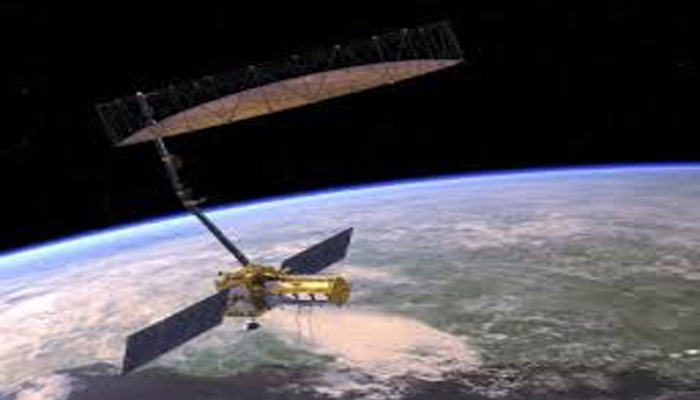
NASA-ISRO’s NISAR Satellite Successfully Deploys Antenna, Paving Way for Global Earth Monitoring.
In a milestone for Earth science and international space collaboration, the NASA-ISRO Synthetic Aperture Radar (NISAR) satellite has successfully deployed its massive 12-meter radar antenna in orbit. This crucial step brings the mission closer to delivering critical data that could help communities worldwide prepare for and respond to natural disasters.
Launched on July 30, 2025, from the Satish Dhawan Space Centre aboard India’s GSLV-F16 rocket, NISAR is the most expensive civilian Earth observation satellite ever built, costing $1.3 billion and weighing over 2.8 tons. The satellite is a joint venture between NASA and ISRO, combining L-band radar from NASA and S-band radar from ISRO to deliver high-resolution imaging through clouds, vegetation, and rain.
The antenna deployment, referred to as the “bloom,” was completed on August 15, 17 days post-launch. The gold-plated wire mesh reflector, supported by a 9-meter boom, is the largest ever deployed on a NASA mission in low Earth orbit. Its successful unfurling sets the stage for science operations, expected to begin by late October 2025.
“This is a first-of-its-kind radar satellite that will change the way we study our planet and predict natural disasters before they strike,” said Nicky Fox, NASA’s Science Mission Chief. Karen St. Germain, Director of NASA’s Earth Science Division, added that the data NISAR gathers will aid disaster preparedness, infrastructure monitoring, and climate resilience globally.
The satellite will revisit nearly all land and ice surfaces every 12 days, creating 3D time-lapse maps to track earthquakes, landslides, glacier melt, floods, and forest degradation. These insights will help first responders, forecasters, and policymakers make informed decisions in agriculture, urban planning, and environmental conservation.
India’s role in the mission extends beyond the launch. The GSLV-F16’s cryogenic engine, a symbol of India’s growing space capabilities, successfully delivered the heavy payload into orbit. ISRO’s S-band radar works in tandem with NASA’s L-band system, enhancing NISAR’s ability to detect changes in vegetation, moisture, and snow with unprecedented accuracy.
With the antenna now in position, the NISAR team will focus on calibrating the radar systems ahead of full-scale operations. By October 2025, the satellite is expected to start providing actionable data to support disaster management and environmental monitoring worldwide.
Representing the largest collaboration of its kind between NASA and ISRO, NISAR demonstrates how international cooperation and advanced technology can combine to protect lives and better understand our ever-changing planet.
Comments are closed.