
Nawaz Sharif Eyes PoK Top Post, Says He’ll Ask Shehbaz Sharif for the Job

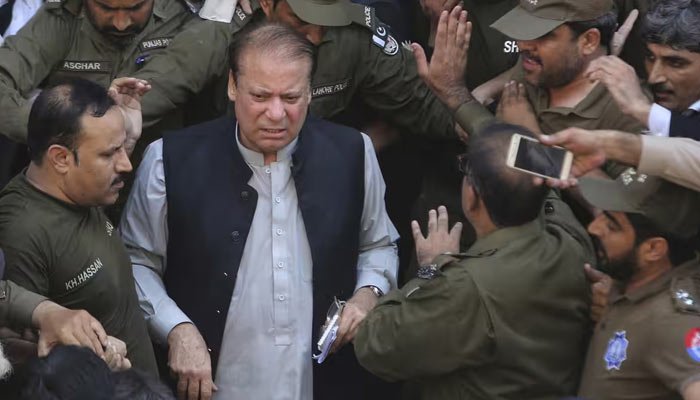
Nawaz Sharif Eyes PoK PM’s Post, Says He Wants to Personally Oversee Region’s Development
Former Pakistan Prime Minister Nawaz Sharif has said he is willing to become the prime minister of Pakistan-occupied Kashmir (PoK) if his party wins the upcoming elections, saying the role would allow him to personally supervise the region’s development.
Addressing an election rally in Muzaffarabad on Tuesday, the Pakistan Muslim League-Nawaz (PML-N) supremo described PoK as his “second home” and said his family’s roots trace back to Kashmir. “If the PML-N forms the government, I will ask Prime Minister Shehbaz Sharif to make me the prime minister of Kashmir (PoK) so that I can personally oversee its development,” Nawaz Sharif told supporters.
The statement comes ahead of PoK elections scheduled between July 27 and August 10, where the PML-N is facing the Pakistan People’s Party (PPP), its coalition partner at the federal level.
India Rejects Pakistan’s Claims
India has consistently maintained that the entire Union Territories of Jammu & Kashmir and Ladakh, including areas under Pakistan’s control, are an integral and inalienable part of India.
New Delhi refers to the region as Pakistan-occupied Kashmir (PoK) and has repeatedly opposed elections conducted there, stating that Pakistan is in illegal occupation of parts of the erstwhile princely state. India also does not recognise the legislative bodies established in PoK or Gilgit-Baltistan.
Why Does PoK Have Its Own Prime Minister?
Unlike Pakistan’s four provinces, PoK has a separate political structure comprising a president and a prime minister. The arrangement dates back to 1947, when Pakistan-backed tribal forces invaded Jammu and Kashmir. Following the invasion, Maharaja Hari Singh signed the Instrument of Accession, legally acceding the princely state to India.
Pakistan, however, did not formally incorporate the territory as one of its provinces. Instead, it established a separate administrative framework while continuing to exercise substantial control over the region. Analysts say the structure has allowed Islamabad to project PoK as having a distinct political identity while maintaining its claims over the larger Kashmir issue.
The prime minister of PoK heads the regional government, although key areas such as defence, foreign affairs and several constitutional matters remain closely linked to Pakistan’s federal establishment. Sharif’s remarks have injected fresh political interest into the PoK election campaign, with the three-time former prime minister openly expressing his desire to lead the region if his party returns to power.
Comments are closed.