

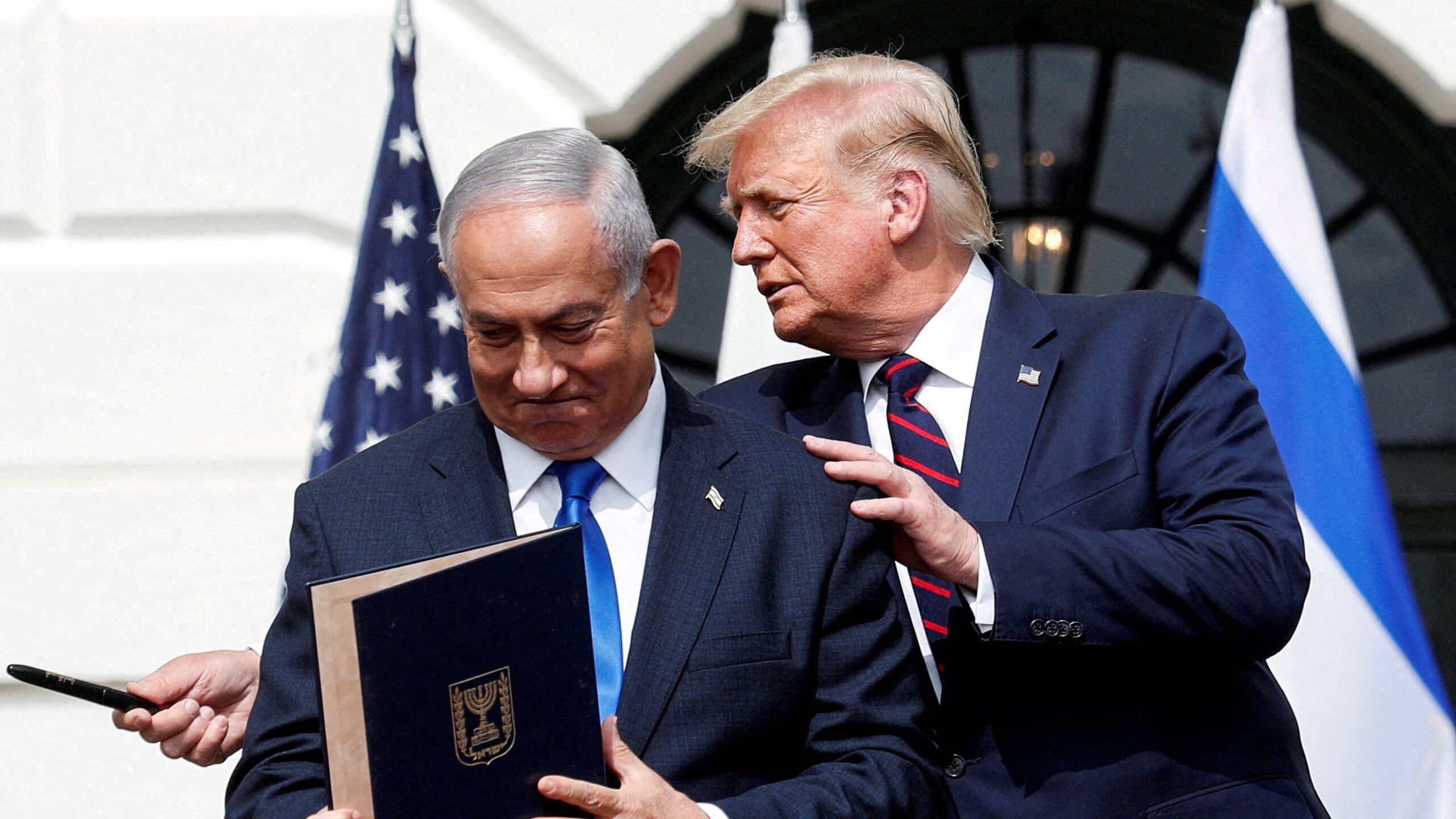
Israeli Prime Minister Benjamin Netanyahu has formally nominated former U.S. President Donald Trump for the Nobel Peace Prize, citing his role in brokering diplomatic breakthroughs in the Middle East. The nomination was handed over personally by Netanyahu during a meeting with Trump in Washington, highlighting Trump’s involvement in the historic Abraham Accords and broader peace efforts in the region.
Netanyahu lauded Trump for facilitating normalization agreements between Israel and several Arab nations, including the United Arab Emirates, Bahrain, Morocco, and Sudan. These deals, collectively known as the Abraham Accords, were signed during Trump’s presidency and have been widely recognized for reshaping regional alliances and economic cooperation.
In his remarks, Netanyahu stated that Trump is “forging peace as we speak, in one country, in one region after the other,” referring not only to the Abraham Accords but also to Trump’s diplomatic posture in other global conflicts. Netanyahu emphasized that these efforts had a tangible impact on reducing hostilities and opening new pathways for trade and dialogue across previously tense borders.
This is not the first time Donald Trump has been nominated for the Nobel Peace Prize. He has received prior nominations from lawmakers and political leaders around the world, particularly for his efforts in the Korean Peninsula and Middle East diplomacy. However, this nomination stands out due to its timing and the high-profile endorsement by the sitting Israeli prime minister.
The Nobel Peace Prize nomination process allows for a wide range of qualified individuals, including heads of state, legislators, and university professors, to submit candidates. While nominations must be filed by early February each year, the Norwegian Nobel Committee keeps details of the selection process confidential for 50 years. The winner is typically announced in October.
Trump’s nomination comes amid heightened tensions in the Middle East, ongoing ceasefire discussions in Gaza, and recent joint strikes involving the U.S. and Israel. It adds a new layer of geopolitical symbolism as both leaders navigate their own political battles and legacies.
While supporters of Trump have praised the nomination as overdue recognition of his foreign policy achievements, critics argue that it may be more political than substantive, given the current instability in the region. Nonetheless, the nomination underscores how Trump’s influence on global diplomacy continues to resonate years after leaving office.
Comments are closed.