
New US Sanctions Bill Could Target India Over Russian Oil While Allowing Uranium Imports

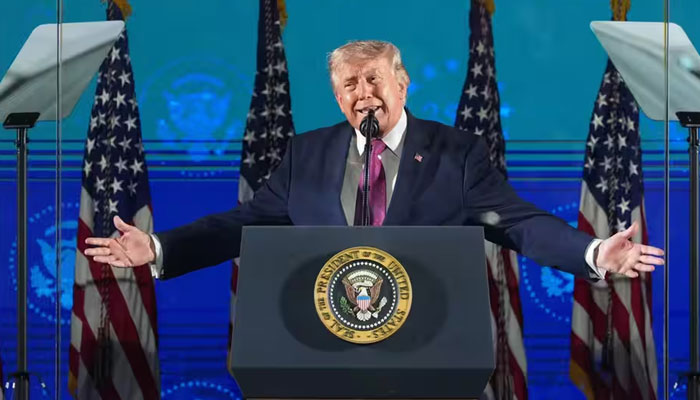
The United States is set to intensify pressure on countries continuing to buy Russian oil and gas.
With a new sanctions law giving President Donald Trump broad authority to impose tariffs of up to 100 per cent on nations that meet its criteria. However, the legislation takes a different approach to Russia’s nuclear fuel trade. While Washington is tightening restrictions on Russian uranium, existing provisions allow limited civilian nuclear cooperation and certain imports of Russian low-enriched uranium (LEU) under specific circumstances.
The Lindsey O. Graham Sanctioning Russia and Iran Act of 2026 was passed by the US House of Representatives with a 262-159 vote after receiving Senate approval by 86-11 in August. A White House official told ANI that Trump intends to sign the legislation, although no date has been announced.
The legislation expands pressure on Russia’s energy and defence sectors, financial networks and shadow fleet, while also introducing additional measures targeting Iran.
It could allow Trump to impose tariffs of up to 100 per cent on major purchasers of Russian oil and gas, including India and China. However, such tariffs would depend on presidential action and would not automatically take effect.
Russian Uranium Gets Different Treatment
The US has already restricted imports of Russian LEU under the Prohibiting Russian Uranium Imports Act, signed into law in 2024.
That law, however, includes provisions allowing the US Energy Secretary, in consultation with the State and Commerce departments, to approve certain imports when alternative supplies are unavailable to maintain a US nuclear reactor or nuclear company, or when the imports are considered to be in the national interest.
The existing waiver framework cannot extend beyond January 1, 2028.
The continued exceptions reflect the importance of Russian enrichment capacity to the US nuclear fuel market.
According to the US Department of Energy, Russia previously supplied around 20-25 per cent of the enriched uranium used in the United States.
US Energy Information Administration data shows that Russian-origin enrichment still accounted for about 26 per cent of the separative work units purchased by US civilian nuclear reactor operators in 2025.
US-based enrichment accounted for about 23 per cent, with France, the UK and the Netherlands supplying much of the remaining share.
No Blanket Ban On Russian Uranium
The new sanctions legislation reinforces existing restrictions on Russian uranium, including material associated with Rosatom and its subsidiaries.
However, it does not amount to an unconditional ban on every Russian nuclear-fuel transaction.
Certain civilian nuclear activities and specified LEU imports can continue under existing legal exceptions and waiver arrangements.
The distinction is significant because replacing Russia’s nuclear fuel capacity cannot happen as quickly as replacing supplies of many other commodities.
Uranium must undergo several stages, including conversion and enrichment, before it can be used as reactor fuel. Russia has developed significant enrichment capabilities, making an immediate break from Russian supplies more complicated for the US nuclear industry.
Washington is consequently pursuing two goals at the same time: reducing dependence on Russian nuclear fuel while ensuring that the supply chain for American nuclear reactors remains stable.
The Energy Department has announced billions of dollars in support for domestic enrichment and fuel-production capacity as the US works to develop alternative supplies.
India Faces Pressure Over Russian Oil Purchases
The legislation could have major implications for India because of its continued purchases of Russian crude.
The bill authorises Trump to impose tariffs of up to 100 per cent on countries that continue purchasing Russian oil and gas and fall within the legislation’s criteria.
India is among the countries that could potentially face such action, although the legislation does not automatically impose the maximum tariff.
The US had already imposed an additional 25 per cent tariff on Indian goods in August, citing India’s purchases of Russian oil. That move raised tariffs on some Indian exports to 50 per cent.
New Delhi has defended its Russian energy purchases, citing energy security and the need to maintain reliable supplies.
Indian Ambassador to the US Vinay Mohan Kwatra has described energy sourcing as a “fundamental national responsibility”, while highlighting India’s position as the world’s third-largest energy consumer and its relatively low per-capita energy use.
India’s Ministry of External Affairs has said it is monitoring developments and remains committed to diversifying its energy sources.
Why The Nuclear Exception Is Significant
The contrasting treatment of Russian oil and nuclear fuel reflects the strategic importance of the US nuclear supply chain.
Washington has taken steps to reduce Russian uranium imports but has simultaneously retained limited mechanisms for purchases when alternative supplies are unavailable or other specified conditions apply.
The new sanctions legislation strengthens restrictions on Russian uranium without completely eliminating those exceptions.
This means the US could potentially increase economic pressure on countries buying Russian crude while its own nuclear operators retain limited access to Russian-origin fuel or enrichment services under defined circumstances.
The situation highlights the difficulty of rapidly severing economic ties with Russia in strategically important sectors.
Despite Washington’s efforts to build domestic enrichment capacity and diversify nuclear fuel supplies, official US data shows that Russian enrichment still accounted for more than a quarter of the SWU purchased by US civilian nuclear reactor operators in 2025.
Comments are closed.