
No-confidence move against Om Birla to dominate Lok Sabha as session resumes; West Asia crisis, US deal also on agenda

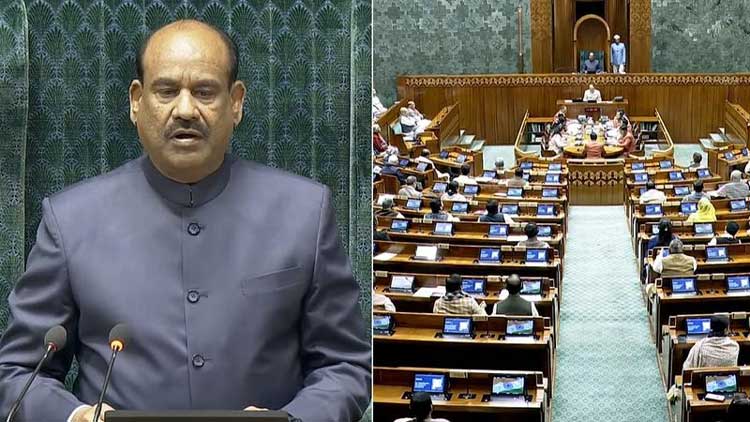
India’s Parliament is set for a high-stakes and potentially turbulent resumption on Monday, March 9, after a recess in the ongoing Budget Session, with the Lok Sabha expected to witness intense political confrontation. The session, which runs until April 2, begins with the House taking up a formal resolution moved by the Opposition to remove Speaker Om Birla.
The treasury benches of the BJP-led National Democratic Alliance (NDA) are preparing a counterattack that could place Leader of the Opposition Rahul Gandhi in a position where he may even face expulsion from Parliament.
The escalating conflict involving the United States and Iran is also expected to feature in the day’s discussions.
Parliament agenda as session resumes
The main item on Monday’s agenda is a no-confidence motion backed by 118 MPs from the INDIA bloc seeking the removal of Om Birla as Speaker. The Opposition has accused him of “brazenly partisan” conduct, alleging that he has suppressed their voices and favoured the ruling Bharatiya Janata Party (BJP).
The All India Trinamool Congress (TMC), which initially hesitated to sign the notice, has now confirmed that its MPs will support the resolution.
The development comes amid a fresh political clash between the BJP and TMC chief and West Bengal chief minister Mamata Banerjee. The BJP has accused Banerjee of insulting President Droupadi Murmu by skipping an event, while Banerjee has countered that the BJP is “misusing the President’s stature” for political attacks.
Rising prices are also likely to add to tensions in the House after the price of domestic LPG cylinder was increased by ₹60 on March 7.
Motion against Om Birla
The motion against the Speaker could face procedural complications because the Lok Sabha has not had a deputy speaker since the NDA returned to power in 2019.
Under parliamentary convention, a deputy speaker would normally preside over proceedings while the Speaker defends himself as an ordinary member. In the absence of one, Birla may have to appoint a member from the panel of chairpersons — possibly senior BJP MP Jagdambika Pal — to conduct the proceedings.
Prime Minister Narendra Modi has strongly defended Birla, describing him as a “brilliant” presiding officer dedicated to the Constitution. In a recent virtual address, Modi said Birla handled “arrogant and unruly” members from “big families” with patience — a remark widely seen as a swipe at the Gandhi family.
Although the debate is expected to be heated, the NDA’s numerical strength in the Lok Sabha means the motion is unlikely to succeed, making Birla’s survival almost certain despite possible disruptions.
Expulsion threat against Rahul Gandhi
Alongside the motion against the Speaker, the government is also targeting Rahul Gandhi through a substantive motion moved by BJP MP Nishikant Dubey. Unlike a standard breach-of-privilege notice, a substantive motion can directly lead to expulsion from Parliament through a majority vote.
Dubey has sought Gandhi’s permanent removal from Parliament and a lifetime ban from contesting elections, accusing him of “continual misdeeds for destabilising the country.” It remains unclear whether or when the motion will be taken up.
The controversy stems from Gandhi citing excerpts from an unpublished memoir titled Four Stars of Destiny by former Indian Army chief M. M. Naravane during the earlier part of the session. Gandhi claimed the manuscript exposed the government’s handling of the 2020 India-China border crisis.
The government argued that referring to a manuscript that had not been cleared by the Ministry of Defence (India) violated parliamentary norms. Defence minister Rajnath Singh said the claims were incorrect and suggested the author could pursue legal remedies if he disagreed with the ministry’s decision to withhold approval.
Foreign policy in focus
External affairs minister S. Jaishankar is also expected to deliver a statement on the West Asia crisis triggered by the conflict between the US, Israel and Iran.
The Congress has accused Modi of abandoning India’s long-standing ties with Iran under pressure from the US and Israel.
Opposition parties have also demanded a full discussion on the proposed India–US trade deal, which Rahul Gandhi has criticised as “anti-farmer” and a surrender of India’s sovereign interests.
They have also cited a recent 30-day waiver by the US allowing Indian refiners to continue purchasing Russian oil as evidence that India’s energy policy is being influenced by Washington.
Possibility of surprise legislation
There has also been speculation that the government could introduce new legislation without prior consultation with the Opposition.
Reports have suggested proposals ranging from a new political funding framework to replace the scrapped Electoral Bond Scheme to populist measures ahead of upcoming state elections.
The government has denied reports that it plans to create a new Union Territory by merging some districts of Bihar and West Bengal.
Meanwhile, parliamentary affairs minister Kiren Rijiju warned that if disruptions continue, the government could invoke the parliamentary “guillotine” procedure to pass pending budgetary grants together without further debate.
Comments are closed.