
Not “Borrowed” But Reimagined: How Dhurandhar’s Track Honors a Timeless Qawwali

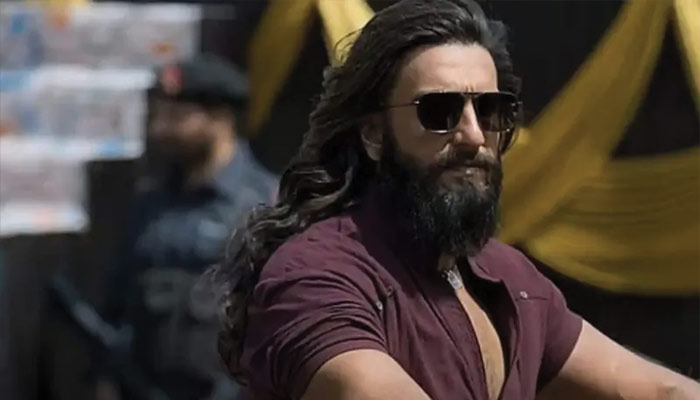
Ranveer Singh’s new film Dhurandhar is drawing attention not only for its performances and narrative but also for its music—particularly a song that taps into deep nostalgia.
As Ranveer makes his on-screen entry, the background track “Na Toh Karwaan Ki Talaash Hai” plays, instantly recognisable to many as the iconic qawwali from the 1960 film Barsaat Ki Raat.
While the Barsaat Ki Raat version was composed by Roshan with lyrics by Sahir Ludhianvi, the melody itself predates the film. Its roots can be traced back to a qawwali by Ustad Mubarak Ali and Fateh Ali Khan, recorded in the late 1940s or early 1950s. The original composition gained legendary status after being performed at a private gathering hosted by Dev Anand, attended by several prominent figures from Hindi cinema.
During the making of Barsaat Ki Raat, composer Khayyam was initially approached to adapt the qawwali for the film. However, he reportedly refused to recreate someone else’s composition, believing it compromised artistic ethics. When Khayyam exited the project, Roshan later composed the qawwali that went on to become one of Hindi cinema’s most celebrated musical pieces. Despite its popularity, the original creators—Mubarak Ali and Fateh Ali Khan—were never formally credited.
Dhurandhar’s track draws from the same musical lineage. In addition to its qawwali base, listeners have also pointed out that its bassline appears to be inspired by Queen’s “Another One Bites the Dust.”
Is Dhurandhar’s Track an Official Remake?
Addressing the discussion, RJ Sachin Sahani explained on Instagram that the Dhurandhar track is an official remake of the Barsaat Ki Raat qawwali, while also highlighting the lesser-known origins of the melody.
“The Dhurandhar track is an official remake of the 1960 Barsaat Ki Raat qawwali, but that version itself was adapted from a qawwali by Mubarak Ali and Fateh Ali Khan, Nusrat Fateh Ali Khan’s father. The original was recorded in the late 1940s or early 1950s and was used in Barsaat Ki Raat without credit. Even the lyrics carry several references to the original qawwali,” he wrote.
Sahani further cited documented accounts describing Dev Anand’s overnight qawwali session at his home, where filmmakers expressed interest in adapting the composition. When Barsaat Ki Raat was in production, Khayyam declined to remake the piece and eventually left the film, after which Roshan took over as composer.
“While the Barsaat Ki Raat version is beautiful and iconic, the original qawwali belonged to Mubarak Ali and Fateh Ali Khan, who never received credit or rights. In that sense, Dhurandhar’s composition also draws from their work, with an added bassline inspired by Queen’s ‘Another One Bites the Dust,’” he added.
Mixed Reactions From Listeners
The post sparked strong reactions online. One user commented, “Roshan is one of my favourite composers. Hearing this is heartbreaking.” Another wrote, “Thank you for giving Pakistani musicians credit where credit is due.”
Several listeners also picked up on the Western influence. “I got it the very second the guitar hit—it’s from ‘Another One Bites the Dust,’” a comment read.
Others struck a more measured note, with one user suggesting, “I think it’s more of a reprise than a copy.”
Khayyam’s Stand on Originality
The book Khayyam: The Man – His Music sheds further light on the episode. It notes that Khayyam had initially agreed to compose music for Barsaat Ki Raat but walked away after being asked to adapt existing qawwalis by Fateh Ali Khan and Mubarak Ali. Firmly opposed to using another artist’s work, Khayyam chose to leave the project rather than compromise on originality.
The renewed debate around Dhurandhar’s song has once again brought questions of credit, influence and musical lineage into focus—underscoring how deeply layered the history of Indian film music can be.
Comments are closed.