
Philippines Under State of Emergency After Typhoon Kalmaegi Claims 114 Lives

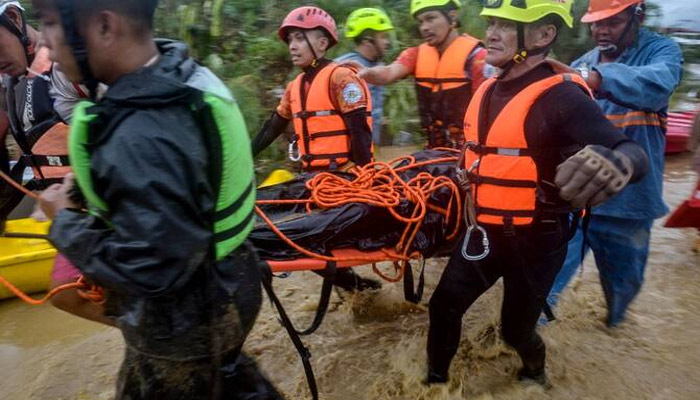
Philippines President Ferdinand Marcos Jr. on Thursday declared a state of national emergency.
After Typhoon Kalmaegi battered the country, killing at least 114 people and leaving 127 missing in what authorities have described as the deadliest disaster of the year. Most of the deaths were caused by flash floods and landslides that swept through central provinces, particularly Cebu, where overflowing rivers inundated residential areas and washed away homes. Officials said 71 deaths were confirmed in Cebu alone, while dozens remain missing in neighboring Negros Occidental.
The typhoon displaced nearly 560,000 residents across the Philippines, with about 450,000 taking shelter in evacuation centers. The storm, which exited into the South China Sea on Wednesday, left behind widespread devastation — destroying infrastructure, toppling power lines, and submerging villages.
Tragedy compounded further when a Philippine Air Force helicopter carrying relief supplies crashed in Agusan del Sur, killing six crew members. The military is investigating the cause of the accident. Kalmaegi’s torrential rains triggered severe flooding that stranded residents on rooftops and led to mass transport disruptions. Authorities reported 3,500 passengers stranded at ports, while at least 186 domestic flights were canceled due to rough weather conditions.
The storm has affected nearly 2 million people nationwide, officials said. As rescue and relief operations continue, meteorologists warned that another tropical system forming in the Pacific could intensify into a super typhoon and threaten the northern parts of the country next week.
Situated along the Pacific “Ring of Fire,” the Philippines is hit by about 20 typhoons annually and frequently experiences earthquakes and volcanic eruptions, making it one of the most disaster-prone countries in the world.
Comments are closed.