
Plan Floated to Build 150-Metre Wall to Protect Antarctica’s ‘Doomsday Glacier’

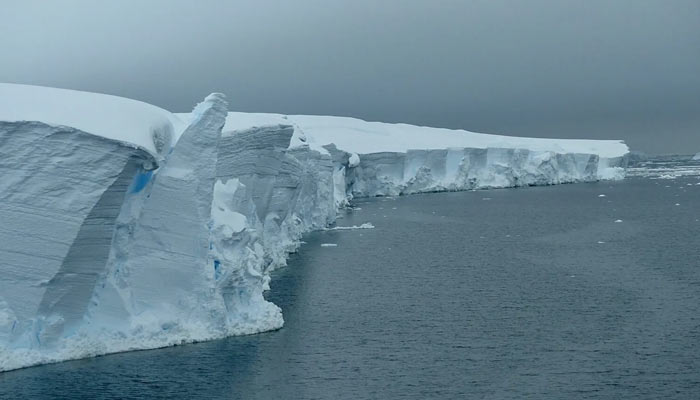
Scientists are sounding the alarm over Antarctica’s Thwaites Glacier—often called the “Doomsday Glacier”—as it melts at an accelerating pace due to human-driven climate change.
If current trends continue, the glacier alone could contribute up to 65 cm to global sea-level rise, placing millions of people in coastal regions at risk of flooding. Thwaites currently accounts for around 4% of annual global sea-level rise. Researchers warn that its collapse could destabilise the entire West Antarctic Ice Sheet, triggering far more severe and irreversible sea-level increases. To better understand the threat, scientists have been drilling into the ice to study how warm ocean water is eroding the glacier from below.
In response to the growing crisis, a group of scientists and engineers has proposed an unconventional intervention: a 150-metre-high underwater barrier designed to block warm ocean currents from reaching the glacier, according to a report by Euronews.
The concept, known as the Seabed Anchored Curtain Project, involves installing an 80-kilometre-long curtain across the seabed in front of Thwaites Glacier. By limiting the flow of warm water beneath the ice, the structure aims to slow melting and stabilise the glacier. The proposal includes a three-year research and development phase to design and test the system, backed by an estimated budget of $10 million.
“We are proud to support the Seabed Curtain project, a groundbreaking initiative in climate research and ocean preservation,” said Thomas Wilhelmsen, Chair of Tom Wilhelmsen’s Foundation, which is supporting the effort. He said the project aligns with the foundation’s focus on sustainability, scientific innovation, and international collaboration.
Despite its promise, experts caution that the proposal faces major technical hurdles. These include ensuring the structure can withstand extreme Antarctic conditions, long-term exposure to ocean forces, and uncertainties about its effectiveness at the required scale.
“Sea-level rise is one of the most serious climate risks humanity faces this century,” said Sasha Post, Director of Outlier Projects. “It is essential to accelerate research—such as seabed anchor curtain initiatives—to assess whether such approaches can safely and effectively reduce this risk.”
While the idea remains experimental and its success uncertain, researchers say the scale of the threat posed by Thwaites Glacier demands urgent exploration of innovative solutions.
Comments are closed.