

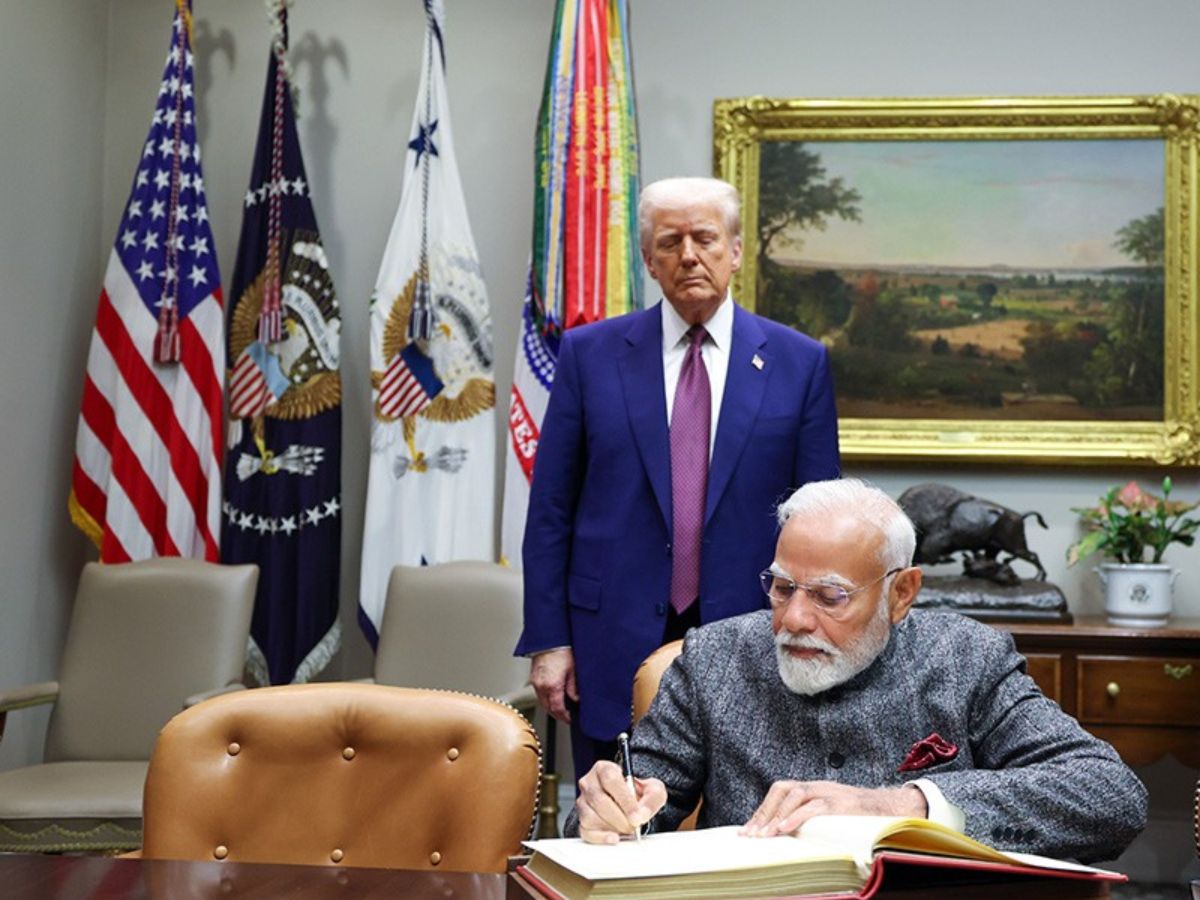
In a significant development in global trade diplomacy, President Donald Trump has announced that the United States is “very close” to finalising a trade agreement with India. The statement, made during a press briefing at the White House, follows weeks of high-level negotiations between Indian and American officials, raising hopes for a long-awaited breakthrough in economic ties between the two democracies.
The announcement comes amid a backdrop of escalating global tariff battles, with the US recently imposing new duties on imports from multiple nations. India, however, appears to be on the brink of securing a favourable position, as both countries work to resolve longstanding trade disputes and rebalance tariff structures.
A Step Toward Normalisation
Described as a “mini deal” by officials on both sides, the agreement is expected to address key irritants in the bilateral trade relationship. It focuses on tariff concessions, regulatory easing, and greater market access in sectors such as industrial equipment, agriculture, pharmaceuticals, and digital services.
For the US, the priority is to expand access for its industrial goods, medical devices, and agricultural exports. India, on the other hand, is keen to protect sensitive sectors like dairy, wheat, and labour-intensive industries, while securing trade relief in areas such as textiles, information technology, and pharmaceuticals.
Commerce Minister Piyush Goyal has been leading India’s negotiation team, engaging in multiple rounds of dialogue with US trade representatives in Washington. The talks have reportedly covered more than 90 percent of tariff lines under consideration, with both sides showing signs of compromise to secure a swift resolution.
Timing and Strategic Importance
The timing of the deal carries both economic and political significance. With inflation pressures and global trade slowdowns affecting domestic markets, a limited trade pact would offer short-term relief to exporters and build investor confidence. It also comes as both nations seek to bolster strategic ties in the Indo-Pacific region, with China’s growing assertiveness in the background.
The Trump administration, which has re-emphasized bilateral trade rebalancing as a key part of its foreign policy, sees India as a crucial economic and geopolitical partner. White House officials referred to India as a “very strategic ally,” and described the Trump-Modi relationship as “very good,” indicating strong political alignment behind the negotiations.
Pending Challenges
Despite optimism from both capitals, a few sticking points remain. India continues to push back on pressure to open its markets to genetically modified agricultural products and maintain its public procurement policies. Meanwhile, the US is demanding stronger intellectual property protections and fewer restrictions on e-commerce platforms.
Sources suggest that the final version of the agreement may be signed within weeks if negotiators resolve remaining differences. The US has already postponed planned retaliatory tariffs on Indian goods until early August, a sign of goodwill and confidence in reaching a mutually acceptable outcome.
The Road Ahead
If concluded successfully, the mini trade deal would mark the most substantial economic agreement between the two countries in recent years. It could also pave the way for a more comprehensive Free Trade Agreement (FTA) in the future, covering broader issues like digital trade, investment regulations, services liberalisation, and supply chain cooperation.
The US and India have a bilateral trade volume exceeding $190 billion, and both countries have repeatedly expressed interest in elevating that figure in the coming decade. A positive resolution to this round of negotiations could serve as the cornerstone for that ambition.
Comments are closed.