

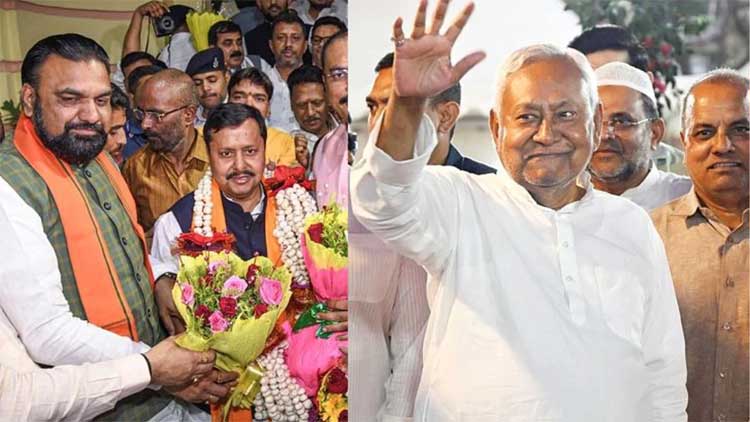
The biennial Rajya Sabha elections were held on Monday to fill 37 seats across 10 states, with voting required in 11 seats — including five in Bihar, four in Odisha and two in Haryana.
Among the أبرز winners was Nitish Kumar, Bihar’s longest-serving chief minister. Candidates backed by the National Democratic Alliance gained ground in Bihar and Odisha, benefiting from cross-voting and absentee legislators, dealing a setback to the Opposition.
Key results
-
Bihar: Nitish Kumar, Nitin Nabin, Ram Nath Thakur, Shivesh Kumar, Upendra Kushwaha
-
Odisha: Manmohan Samal, Sujeet Kumar, Santrupt Misra, Dilip Ray
-
Haryana: Sanjay Bhatia, Karamvir Singh Boudh
Unopposed winners across states
Several prominent leaders were elected unopposed, including:
In West Bengal, four Trinamool Congress nominees — Babul Supriyo, Rajeev Kumar, Menaka Guruswamy and Koel Mallick — were elected without contest, along with BJP’s Rahul Sinha. Guruswamy’s win is notable as she becomes India’s first openly queer Member of Parliament.
In Maharashtra, all seven candidates — including Sharad Pawar — secured unopposed victories.
In Telangana, Congress nominees Abhishek Singhvi and Vem Narender Reddy were elected unopposed.
In Tamil Nadu, six candidates, including M Thambidurai, Anbumani Ramadoss, Tiruchi Siva and others, won without a contest.
In Himachal Pradesh, Congress candidate Anurag Sharma, a close aide of chief minister Sukhwinder Singh Sukhu, emerged victorious.
Overall, while many seats were decided uncontested, the contested races highlighted shifting political equations, with the NDA strengthening its position in key states.
Comments are closed.