

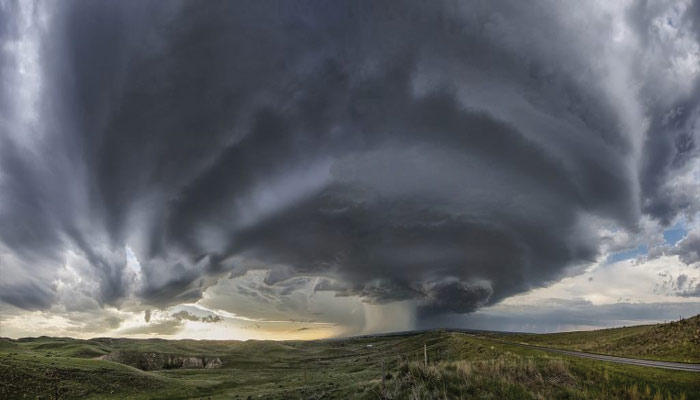
Any lingering doubts about the reality and human cost of climate change have been starkly dispelled by this year’s extreme hurricane and cyclone season.
Across continents, storms of unprecedented intensity have devastated communities, displaced millions and killed thousands, underscoring the accelerating impact of global warming.
The Atlantic basin alone recorded three Category 5 hurricanes, a phenomenon seen only once before in modern records. Hurricane Melissa tore through Jamaica, Hispaniola and Cuba, while Hurricanes Erin and Humberto added to the destruction. In the Pacific, two powerful typhoons struck the Philippines within a single week, and Cyclone Ditwah caused widespread devastation in Sri Lanka.
What set this season apart was not just the number of storms, but their extraordinary strength and rapid intensification. The US National Oceanic and Atmospheric Administration (NOAA) reported that Hurricane Erin experienced one of the fastest intensification rates ever recorded, while Melissa saw dramatic pressure drops and surging wind speeds. NOAA’s Accumulated Cyclone Energy (ACE) Index reached 132.9 in 2025, pointing to a highly active and above-normal season.
In Asia, Typhoon Ragasa packed sustained winds of 270 km/h, unleashing torrential rain, floods and landslides across Taiwan, the Philippines, southern China and Vietnam. Millions were affected by evacuations, power outages and infrastructure damage, with entire regions plunged into darkness.
Scientists have long warned that rising ocean temperatures are fuelling stronger storms. Warmer seas provide more energy and moisture, intensifying wind speeds and rainfall. Studies show that for every 1°C rise in global temperatures, storm-related rainfall can increase by 14–21 percent. With the planet already warming beyond 1.5°C above pre-industrial levels, the consequences are becoming increasingly destructive.
South and Southeast Asia have been among the worst affected. More than 1,000 deaths have been reported this year due to cyclones and extreme monsoon rains across the region. In Sri Lanka alone, Cyclone Ditwah has killed over 600 people, displaced nearly one million, and left hundreds missing.
The impacts are not confined to coastal areas. Extreme rainfall has triggered deadly inland flooding as well. In Texas, flash floods along the Guadalupe River earlier this year killed nearly 300 people after water levels surged within minutes. Climate studies warn such events will become more frequent and severe.
Coastal cities face an added threat from storm surges amplified by sea-level rise, driven by melting glaciers and ice sheets. Climate risk assessments warn that a future superstorm could flood up to 25 percent of New York City, causing damage exceeding $20 billion and overwhelming transport and drainage systems.
Beyond immediate destruction, floods also carry long-term public health consequences. Research links major flooding events to increased deaths from respiratory disease, displacement, food insecurity and infrastructure collapse—impacts that cumulatively result in millions of preventable deaths worldwide.
At the same time, climate change is intensifying droughts in other regions, straining food systems and water supplies. The UN’s Emissions Gap Report 2025 warns that current policies put the world on course for 2.8°C of warming by the end of the century—far above the limits set by the Paris Agreement.
Scientists caution that without rapid and sustained cuts in greenhouse gas emissions, the devastation already unfolding will only worsen. The scale and frequency of extreme weather now being witnessed make one reality clear: climate change is no longer a future threat—it is a present and accelerating global crisis.
Comments are closed.