

Nearly two weeks after Republicans suffered significant losses in Georgia, New Jersey, Pennsylvania and Virginia, GOP leaders remain publicly confident that neither their policies nor President Donald Trump’s leadership are to blame.
Trump and his advisers argue Democrats and the media are misleading voters about the state of the economy. Party strategists preparing for the 2026 midterms are urging candidates to stand firmly with the president and highlight his accomplishments rather than adjust their message.
That stance, reflected in private GOP strategy sessions and talking points circulated in Washington and inside the White House, underscores how closely the Republican Party’s fortunes continue to hinge on Trump. It also comes as growing numbers of Americans report personal strain from high prices.
Despite this, Republican National Committee spokesperson Kiersten Pels said the party is “fully aligned” behind Trump and his agenda. His approval rating, however, mirrors the standing of former Presidents Barack Obama and George W. Bush at this point in their second terms—both of whom saw their parties suffer major midterm defeats.
Trump denies economic strain despite voter concerns
Although aides have begun shifting the administration’s messaging toward affordability issues since the election, Trump insists economic conditions are strong and prices are falling. He points to recent tariff cuts on beef and other goods as proof of action but continues to claim inflation was historically high under Democrats and is now “back to normal.”
The president has also inaccurately claimed Thanksgiving dinner costs would fall by 25 percent; government data shows grocery prices are up 2.7 percent from 2024.
Economic worries were the leading concern for voters in this month’s elections, according to the AP Voter Poll.
Republican strategist Doug Heye warned that dismissing those concerns may hurt GOP candidates in 2026. “If you’re not talking about what voters are talking about, they will tune you out,” he said.
Some Republicans distance themselves from Trump’s message
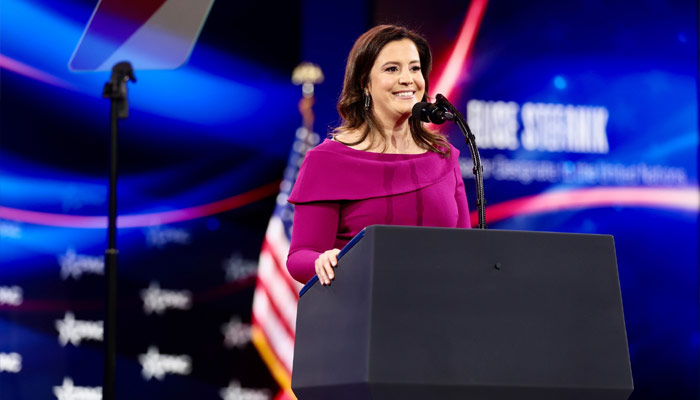
Not all Republicans are adopting the White House’s posture. Rep. Elise Stefanik of New York, who launched a gubernatorial bid last week, said affordability is the overwhelming issue for voters in her state. She downplayed culture-war issues—like transgender athlete restrictions—that dominated some GOP campaigns this year.
Stefanik did not criticize Trump directly but declined to say whether she would support his threat to deploy the National Guard to New York City. Instead, she focused on defeating Democratic Gov. Kathy Hochul, saying Republicans in the state are “fully united” behind that goal.
RNC talking points downplay losses, inflate Trump’s standing
Internal Republican National Committee talking points obtained by AP frame the recent defeats as the result of Democratic turnout advantages and sidestep GOP losses in Georgia and Pennsylvania. They also claim Trump is more popular than Obama or Bush were at this stage in their presidencies—despite polling showing the opposite.
A November AP-NORC poll puts Trump’s approval at 36 percent, slightly higher than the same point in his first term. Obama and Bush were in the low 40s during this period of their second terms, according to Gallup polling—and both presided over major midterm losses soon afterward.
Nevertheless, the RNC’s messaging doubles down, insisting the elections “were not a referendum” on Trump or his policies and calling on “Make America Great Again” voters to turn out in force in 2026.
Comments are closed.