
Russia Reaffirms Support for India’s Permanent Seat at UN Security Council

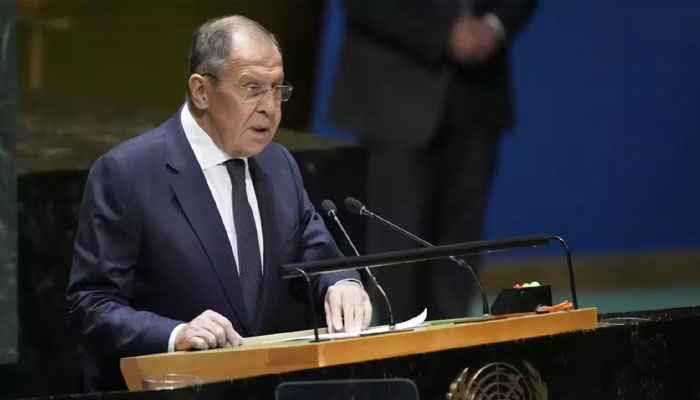
Russia Backs India’s Permanent UNSC Bid, Calls for More Global South Representation
Russia has strongly backed India’s bid for a permanent seat on the United Nations Security Council, while calling for any future expansion to give greater representation to countries from Asia, Africa and Latin America.
Addressing the UN General Assembly in New York on Saturday, Russian Foreign Minister Sergey Lavrov said Moscow supports India and Brazil becoming permanent members of the Security Council.
Lavrov said Security Council reform should reflect the interests of the Global South and increase the representation of developing countries. At the same time, he argued against expanding permanent membership to additional Western powers, specifically mentioning Germany and Japan.
He also stressed that any reform of the Council should not reduce the powers currently enjoyed by its five permanent members.
Russia Backs India, Brazil
Lavrov reiterated Moscow’s position that India and Brazil should have permanent seats as part of a broader reform of the Council.
Russia has consistently called for greater representation of developing countries in the UN’s key decision-making body. Its latest position comes as negotiations over Security Council reform remain a major issue at the ongoing UN General Assembly session.
Lavrov’s comments also highlight the differences within the G4 grouping of India, Brazil, Germany and Japan, which has jointly pushed for permanent representation for its members.
Mauritius Supports India’s Bid
India also received backing from Mauritius during the General Assembly debate.
Mauritian Foreign Minister Dhananjay Ramful said his country supports the positions of the G4 and L69 groupings on Security Council reform and reiterated its support for India’s candidature for permanent membership.
“We support the positions of the G4 and of L69 on Council reform, and we reiterate our support for India’s candidature for a permanent seat, commensurate with its constructive role in global affairs,” Ramful said.
The L69 group brings together developing countries that support reform of the Security Council, while the G4 campaigns for permanent seats for India, Brazil, Germany and Japan.
How The UN Security Council Works
The Security Council currently has 15 members.
Five — China, France, Russia, the United Kingdom and the United States — are permanent members and have veto power. The remaining 10 members are elected by the General Assembly for two-year terms.
Any expansion of the Council’s permanent membership would require an amendment to the UN Charter. Such a change needs approval by two-thirds of the General Assembly and ratification by two-thirds of UN member states, including all five existing permanent members.
China’s Position Remains Key
Russia’s support is significant for India’s campaign, but it does not by itself resolve the long-running deadlock over Security Council reform.
China, another permanent member and a close Russian partner, has not backed India’s permanent membership bid. Differences also remain among the five permanent members and the wider UN membership over the number and composition of new permanent and non-permanent seats.
For India, the challenge therefore extends beyond securing individual endorsements. Any final reform package would need broad support among UN member states and, ultimately, the approval of all five existing permanent members.
Comments are closed.