

The European Union has agreed to indefinitely freeze Russian central bank assets held in Europe, a move aimed at strengthening long-term financial support for Ukraine amid its war with Russia.
According to Reuters, EU governments on Friday decided to immobilise around €210 billion ($246 billion) in Russian sovereign assets for as long as necessary, replacing the current system under which the freeze must be renewed every six months.
EU officials see the change as a way to prevent individual member states, including Hungary and Slovakia — which maintain closer relations with Moscow — from blocking future extensions of the freeze. A failure to renew the measure could have forced the bloc to return the funds to Russia.
The decision is also intended to ease concerns among some member states, particularly Belgium, over a separate EU proposal to use profits from the frozen assets to back a loan of up to €165 billion for Ukraine. The loan would help cover Ukraine’s military and civilian budget needs in 2026 and 2027, Reuters reported.
Under the plan, Ukraine would repay the loan once Russia pays war-related damages. Final details of the proposal are expected to be approved by the European Council on December 18.
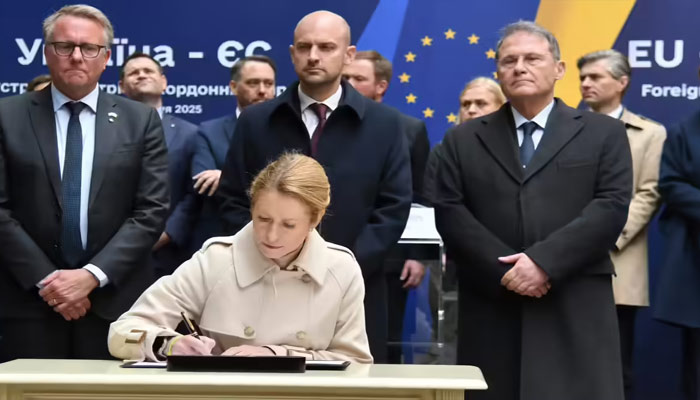
Ukrainian Prime Minister Yulia Svyrydenko welcomed the move, calling it a “landmark step toward justice and accountability.” In a post on X, she said the decision strengthens the legal basis for a reparations loan and moves Ukraine closer to holding Russia financially responsible for the damage caused by the war.
Ukrainian President Volodymyr Zelenskyy is due to visit Berlin on Monday for talks with German Chancellor Friedrich Merz. The meeting will later include European, EU and NATO leaders, according to the German government.
Hungarian Prime Minister Viktor Orban criticised the decision, warning that the use of a qualified majority vote — requiring support from 15 of the EU’s 27 member states representing 65% of the bloc’s population — would cause “irreparable damage” to the EU. He said Hungary would seek to “restore a lawful state of affairs.”
Comments are closed.