
Scientists Link Surge in Extreme Weather to Rising Greenhouse Gas Emissions

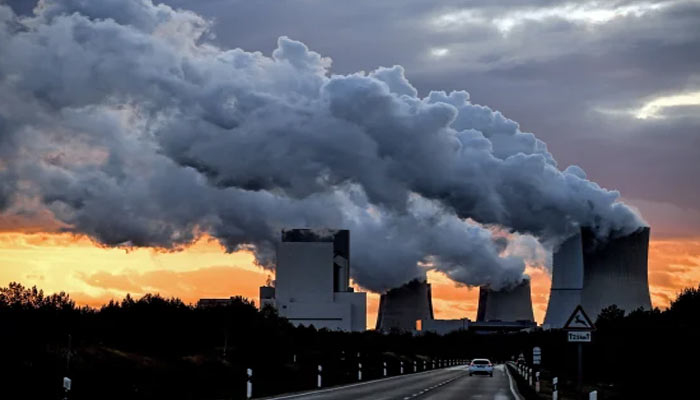
World Set to Blow Past 1.5°C Climate Target by 2028, Scientists Warn.
Human activity is pushing the planet dangerously close to a critical climate tipping point—and we could cross it in less than three years.
A new report from 60 top climate scientists warns that by early 2028, we will likely have emitted enough carbon dioxide to make limiting global warming to 1.5°C all but impossible. That target—set in the 2015 Paris Agreement—was meant to help avoid the worst effects of climate change.
“We’re not just seeing things get worse. They’re getting worse faster,” said Zeke Hausfather, study co-author and climate scientist at Berkeley Earth and Stripe. “We’re moving in the wrong direction at a time when we need to act most urgently.”
Time Is Running Out
The study, published in Earth System Science Data, estimates that only 143 billion more tons of CO₂ can be released before breaching the 1.5°C threshold. With the world emitting around 46 billion tons per year, that limit could be reached by February 2028.
Earth has already warmed by about 1.24°C since preindustrial times. While 2024 briefly surpassed 1.5°C for the year, the Paris goal refers to long-term averages, typically measured over two decades.
Climate System Warning Signs Flash Red
The report highlights an alarming trend: the rate of global warming has accelerated to nearly 0.27°C per decade. Meanwhile, Earth’s energy imbalance—the amount of solar heat the planet absorbs versus how much it radiates back into space—has increased by 25% in just over a decade.
“This is one of the most important signs of human-caused climate change,” Hausfather said. “And it’s clearly getting worse.”
The surge is mainly driven by fossil fuel emissions, but declining pollution levels, cloud changes, and other factors have also unmasked more of the underlying warming.
The Cost of Crossing 1.5°C
Crossing the 1.5°C threshold doesn’t mean immediate catastrophe, but it does mean more intense and frequent heatwaves, droughts, storms, and sea level rise—especially threatening for small island nations and low-income communities.
“This is a political and moral limit,” said Joeri Rogelj, a co-author from Imperial College London. “Beyond it, the damage becomes increasingly severe and uneven.”
Despite the grim outlook, scientists stress that it’s not too late to act. Every fraction of a degree we prevent still makes a difference.
No Room for Complacency
“There’s no silver lining here,” said Hausfather. “This is a wake-up call—not just about where we’re headed, but how fast we’re getting there.”
Comments are closed.