
Scientists Reveal How India Drifted Away From Antarctica In Ancient Earth Shift

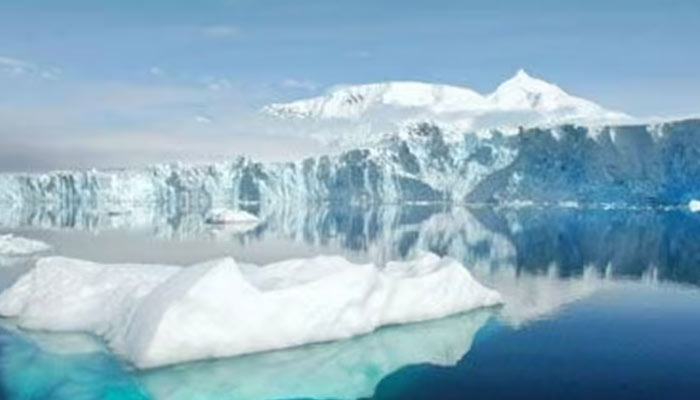
Scientists have uncovered new evidence suggesting that parts of present-day India and Antarctica were once joined as part of a giant ancient landmass before drifting apart millions of years ago.
The discovery comes from a study of ancient rocks found in the Vizianagaram-Salur belt of Andhra Pradesh. Researchers found that these rocks closely match geological formations in East Antarctica, indicating the two regions were once connected through a massive mountain system called the Rayner–Eastern Ghats belt.
The study was carried out by scientists from India, Australia and South Korea, who analysed granulites — deep crustal rocks formed under intense heat and pressure billions of years ago.
Minerals Revealed Clues From Earth’s Ancient Past
Researchers examined minerals such as zircon, garnet and monazite to trace the rocks’ geological history.
Prof Sankar Bose from Presidency University said zircon crystals played a crucial role because they can survive extreme geological conditions for billions of years.
Using radioactive dating techniques, scientists were able to determine when major geological events occurred in the Eastern Ghats region.
The analysis showed that rocks from Andhra Pradesh and East Antarctica shared nearly identical ages, mineral structures and chemical signatures — suggesting they were once part of the same geological formation.
Three Shared Geological Phases Identified
The study found evidence of three major geological stages recorded in both India and Antarctica:
Around 1 billion years ago, the rocks were subjected to extreme temperatures during a continental collision that formed a huge mountain range.
Between 950 and 890 million years ago, the region experienced additional heating and deformation deep within Earth’s crust.
Around 570 to 540 million years ago, mineral-rich fluids passed through fractures in the rocks, leaving behind matching chemical patterns in both regions.
Scientists say the similarities strongly support the theory that eastern India and East Antarctica once evolved together as part of a connected crustal block.
Gondwana’s Breakup Pulled The Continents Apart
Researchers believe the regions remained connected until the breakup of the ancient supercontinent Gondwana roughly 130 to 150 million years ago.
As tectonic plates shifted, the Indian landmass began moving north toward Asia while Antarctica drifted southward, eventually separating the once-linked mountain belt.
Although the continents are now divided by vast oceans, scientists say the rocks continue to preserve evidence of their shared geological origin dating back billions of years.
Comments are closed.