
She makes reels, she makes runs: Jemimah Rodrigues lets her bat answer the critics

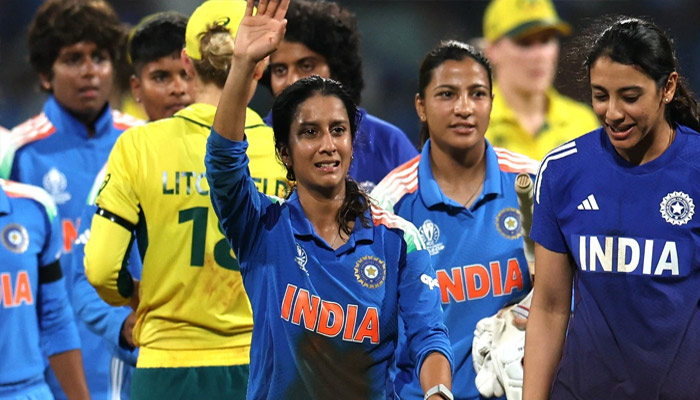
She Makes Reels, She Makes Runs: Jemimah Rodrigues Turns Trolls Into Believers.
“Run banana, wo kya hota hai? Mera cringe reel dekh aur gaana sun.” It began as mockery — a jibe from trolls questioning Jemimah Rodrigues’ priorities, implying that her love for reels, music, and laughter meant she wasn’t serious about cricket. But on Thursday night at DY Patil Stadium, those very words came back — not as taunts, but as poetry of poetic justice.
Under the floodlights, Jemimah crafted a masterpiece — an unbeaten 127 that powered India to their third Women’s World Cup final and the highest successful chase in ODI history, hunting down 339 against seven-time champions Australia. Every boundary was defiance, every stroke redemption. Her bat became her voice — silencing critics, reclaiming her joy, and proving that expression and excellence can coexist.
A Hero in Her Own Tune
Jemimah has always been more than just a cricketer. Her guitar, her smile, her songs — they’ve made her relatable, human. But they’ve also made her an easy target. In a society where women’s joy is often mistaken for distraction, her confidence was misread as carelessness.
When runs dried up, the ridicule grew louder. She was mocked for smiling in defeat, for posting reels after losses. But Jemimah never stopped being herself. And on the biggest stage, she showed why she didn’t need to.
The Girl Who Watched, Then Became
Back in 2017, a 16-year-old Jemimah watched from the sidelines as India reached the World Cup final. She was there at the Mumbai airport, part of the welcoming crowd for Mithali Raj and Jhulan Goswami’s team. Few noticed the wide-eyed teenager in the corner — dreaming quietly.
Eight years later, that same girl carried India into another final — not as a fan, but as the face of a new generation.
Built, Broken, and Reborn
Jemimah’s journey hasn’t been smooth. Dropped, doubted, and dismissed, she endured a brutal stretch of form — painful ducks, low scores, and self-doubt. She fought through anxiety and mental fatigue, even as her smile never left social media.
But when opportunity came — a move up the order to No. 3 — she seized it. Her half-century against New Zealand sparked a turnaround; her century against Australia sealed her redemption. That innings wasn’t loud; it was composed, almost meditative. Her bat didn’t celebrate — it simply spoke.
The Strength Behind the Smile
After the win, Jemimah couldn’t hold back her tears. She hugged Amanjot Kaur, then sprinted into her parents’ arms. It wasn’t just victory — it was release. “I’ve cried almost every day on this tour,” she admitted. “I was struggling mentally, but I kept reminding myself: Stand still, and God will fight for you. And He did.”
Her honesty struck a chord — a reminder that heroes are human too, that strength sometimes looks like simply showing up.
A New Chapter in Indian Women’s Cricket
Jemimah’s rise has reshaped the idea of what it means to be an Indian cricketer. She’s unapologetically modern, expressive, and faith-driven — proof that femininity and ferocity can walk hand in hand. Her 2025 season — three centuries, countless lessons — has been a story of resilience. Like Harmanpreet Kaur’s iconic 171 in 2017, Jemimah’s 127 will be remembered not just for the numbers, but for the narrative: a young woman reclaiming her identity through sport.
As India march into the final, Jemimah stands at the heart of their dream — not just as a batter, but as a symbol. Of grace under fire. Of belief in self. Of a generation that refuses to choose between passion and purpose.
Comments are closed.