
Sheikh Hasina Row: Bangladesh Considers Taking India to ICJ, Raising Stakes in Diplomatic Tensions

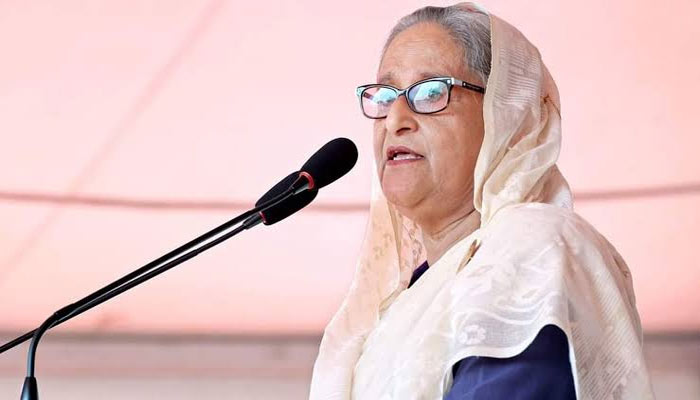
Sheikh Hasina Extradition Row: Can Bangladesh Really Take India to the International Court of Justice?
Bangladesh has raised the stakes in its dispute with India over Sheikh Hasina’s extradition, with Parliament Speaker Hafiz Uddin Ahmed warning that Dhaka could approach the International Court of Justice (ICJ) if New Delhi refuses to hand over the former prime minister.
Ahmed issued the warning while visiting Pakistan on an official six-day tour. He also dismissed speculation that Hasina could return to Bangladesh on December 16, which marks the country’s Victory Day. The Speaker asserted that she would be taken directly to prison if she entered Bangladesh and claimed that her return was unlikely for at least another 10 years.
The latest statement has added to the diplomatic tensions that have persisted since August 2024, when Hasina left Bangladesh and took refuge in India following a mass uprising that ended her government. Dhaka has since pressed New Delhi to extradite her, turning the issue into a major point of contention between the neighbours.
However, Bangladesh’s threat of legal action faces considerable challenges. The ICJ, commonly known as the World Court, cannot automatically hear disputes between sovereign countries. Its jurisdiction generally requires the consent of the states concerned or a specific provision in an international agreement allowing the court to intervene.
Why Bangladesh May Struggle to Bring India Before the ICJ
The 2013 extradition treaty between India and Bangladesh does not include a clause referring disagreements over extradition to the International Court of Justice. India has also not accepted the court’s compulsory jurisdiction for disputes arising under bilateral treaties.
Consequently, Dhaka would need to identify another legal basis to establish the ICJ’s jurisdiction. Without India’s consent or an applicable treaty provision, initiating a case could prove particularly difficult.
The extradition treaty also contains provisions that allow either country to reject a request under certain circumstances. These include exceptions relating to political offences and situations where concerns arise over the fairness of legal proceedings or the possible imposition of capital punishment.
The death sentence awarded to Hasina in absentia by a Bangladeshi tribunal in November 2025 could therefore become a significant factor in India’s assessment of the extradition request. New Delhi may examine the implications of the sentence alongside the safeguards provided under the treaty and relevant international legal principles.
Pakistan Visit Adds a Geopolitical Dimension
Ahmed’s choice of Islamabad as the venue for his remarks has also attracted attention in India. His visit is being viewed as significant because it marks the first official trip to Pakistan by a sitting Speaker of Bangladesh’s Parliament.
During his stay, Ahmed questioned India’s contribution to Bangladesh’s 1971 Liberation War. He alleged that India’s intervention was aimed at weakening Pakistan rather than helping the Bengali population secure independence.
He also supported Pakistan’s position that the Kashmir dispute should be resolved in accordance with United Nations resolutions. These comments have added another layer to the diplomatic friction between New Delhi and Dhaka.
How Far Could the Dispute Escalate?
Bangladesh’s ICJ warning signals a tougher diplomatic position on Hasina’s extradition, but moving from political statements to an international legal case would require overcoming substantial jurisdictional barriers.
Even if Dhaka seeks to pursue the matter internationally, the absence of an automatic route to the ICJ could limit its options. The dispute is therefore likely to remain centred on diplomatic negotiations, treaty obligations and the political calculations of both governments.
For India, the challenge lies in balancing its legal position under the extradition agreement with the broader consequences for regional relations. For Bangladesh, securing Hasina’s return remains a politically sensitive issue.
The standoff could further complicate ties between the two neighbours, particularly as Dhaka’s engagement with Islamabad draws renewed attention to changing regional dynamics in South Asia.
Comments are closed.