
Sinking Indus Delta Displaces 1.2 Million Amid 80% Water Flow Decline

The Indus Delta Is Dying: Saltwater, Silence, and a Displaced People.
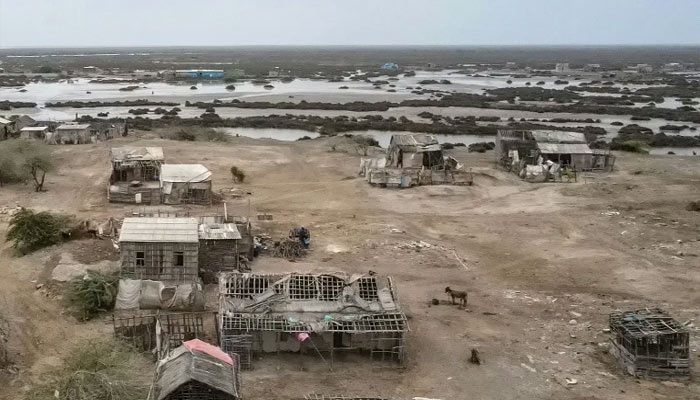
On a shrinking island in Pakistan’s Indus delta, Habibullah Khatti walks alone across cracked salt flats to say goodbye at his mother’s grave. He is one of the last to leave his village — a place slowly erased by rising seas and a vanishing river. “The saline water has surrounded us from all four sides,” says the 54-year-old from Abdullah Mirbahar village, near the coastal town of Kharo Chan. He once fished these waters, then worked as a tailor when the fish disappeared. Now, with barely four families left among 150, even that is no longer possible.
Around him, bamboo and wood houses sit abandoned, stray dogs roam through empty lanes, and the evening silence is broken only by the sound of water licking at the edges of what once was farmland.
A Region Sinking — And Forgotten
Where the mighty Indus River meets the Arabian Sea, a crisis is unfolding. Decades of upstream diversion, climate change, and rising sea levels have turned the Indus delta — once one of the world’s richest ecosystems — into a zone of salt, dust, and despair.
Once home to thriving fishing and farming communities, the delta has seen more than 1.2 million people displaced over the past two decades, according to a study by the Jinnah Institute. In Kharo Chan alone, the population has halved since 1981, shrinking from 26,000 to 11,000.
The downstream flow of water into the delta has declined by 80% since the 1950s. What was once fertile land is now poisoned by seawater, with salinity levels rising nearly 70% since 1990. Crops no longer grow. Shrimp and crab stocks have plummeted. “The delta is both sinking and shrinking,” says Muhammad Ali Anjum of WWF Pakistan.
No Water, No Choice
The delta’s collapse has turned entire towns into ghost villages. In nearby Keti Bandar, a crust of white salt covers the ground. With no fresh water, boats now carry drinking water from miles away, and residents transport it home on donkeys.
“Who leaves their homeland willingly?” asks Haji Karam Jat, who lost his house to the sea and rebuilt farther inland. “You only leave when you have no choice.” The story is the same across dozens of delta villages. Some residents flee to Karachi, others to Hyderabad, crowding into already stretched cities with no safety net and no jobs.
Broken River, Broken System
Much of this devastation traces back to the ways the Indus River has been controlled and exploited. First altered by British-era canals, it has since been carved up by dozens of dams and irrigation projects. These have brought water to Punjab’s farms and hydropower to the grid — but they’ve drained life from the river’s final stretch.
Recent protests in Sindh forced the military to halt new canal projects, amid rising anger from delta communities. Meanwhile, India’s decision to revoke the 1960 Indus Waters Treaty, which governs river-sharing between the two nations, has raised alarm. Pakistan has called the move an “act of war,” fearing upstream dams could further choke the delta.
Culture, Displaced
What’s vanishing isn’t just land — it’s a way of life. “We haven’t just lost our land, we’ve lost our culture,” says Fatima Majeed, a climate activist with the Pakistan Fisherfolk Forum. Her grandfather relocated the family from Kharo Chan to Karachi years ago.
Women who once stitched fishing nets or packed the day’s catch now struggle to find work in cities. Families who lived off land and sea now rely on informal jobs, scattered and disconnected.
Fragile Hopes of Recovery
In 2021, Pakistan and the United Nations launched the ‘Living Indus’ initiative to restore the river basin and parts of the delta. The Sindh government is also running mangrove replantation drives to rebuild natural barriers against saltwater. But those efforts are uneven. Even as mangroves grow back in some areas, land-grabbing and coastal real estate projects continue to clear critical ecosystems.
“The government’s response is slow, and sometimes contradictory,” says Majeed. Now, as Habibullah Khatti prepares to join the growing wave of environmental migrants heading for Pakistan’s cities, the only thing he can carry with him is memory. “In the evening, an eerie silence takes over,” he says quietly, before walking away from the only home he has ever known.
Comments are closed.