
SIR Phase 2: 51 Crore Voters to Be Covered Across 12 States and UTs After Bihar

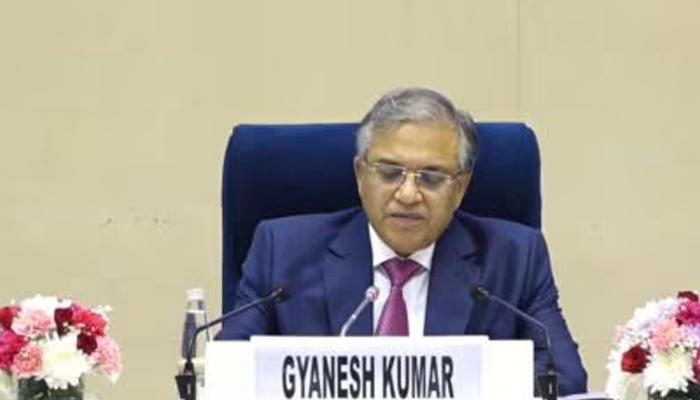
The Election Commission will launch the second phase of the Special Intensive Revision (SIR) of electoral rolls across 12 states and Union Territories (UTs), covering nearly 51 crore voters, Chief Election Commissioner Gyanesh Kumar announced on Monday.
The exercise will take place in the Andaman and Nicobar Islands, Lakshadweep, Chhattisgarh, Goa, Gujarat, Kerala, Madhya Pradesh, Puducherry, Rajasthan, Tamil Nadu, Uttar Pradesh, and West Bengal. Tamil Nadu, Puducherry, Kerala, and West Bengal are among the states scheduled for elections in 2026. Kumar clarified that the SIR schedule for Assam will be announced separately.
Key Dates and Process
The enumeration process will begin on November 4 and continue until December 4, 2025. Draft rolls will be published on December 8, followed by the claims and objections window from December 9, 2025, to January 8, 2026. Hearings will conclude by January 31, and final electoral rolls will be published on February 7, 2026.
At a press briefing in Delhi, Kumar said the exercise follows the successful completion of the first phase in Bihar, which covered over 90,000 polling stations with zero appeals. “The participation of voters in Bihar has been exemplary and sets a benchmark for the next phase,” he noted.
Rolls to Be Frozen, Verification Begins
Kumar announced that the voter lists in all participating states will be “frozen” at midnight tonight, marking the start of the next phase. Booth Level Officers (BLOs) will visit every household three times during the enumeration period to distribute Unique Enumeration Forms containing pre-filled voter details for verification.
He said the forms will allow voters to verify their names against historical records, including voter lists from 2002–2004, which will be made publicly available on voters.eci.gov.in. “If a voter’s name or that of their parents appears on the 2003 rolls, no additional documents will be required,” Kumar explained.
Training and Coordination
Training for poll officials involved in Phase 2 begins Tuesday. BLOs will receive detailed briefings to ensure accurate door-to-door verification. Kumar directed Chief Electoral Officers (CEOs) and District Electoral Officers (DEOs) to meet political parties within two days to explain the SIR process and ensure full transparency.
Aadhaar and Documentation
The CEC clarified that while Aadhaar may be used as identity proof during the SIR, it does not establish citizenship, date of birth, or domicile. “We have advised all voters to provide appropriate supporting documents where required,” Kumar said.
State Cooperation and Inclusion
Addressing questions about coordination with states, Kumar said there was no conflict with West Bengal or any other state government. “The Election Commission is performing its constitutional duty, and state governments are obligated to assist in the process,” he said.
Kerala’s inclusion in Phase 2, he added, was due to the absence of local body election notifications, while Assam’s revision will be announced separately owing to its ongoing citizenship verification programme.
Purpose and Scope
Kumar said the SIR aims to ensure “no eligible voter is left out and no ineligible name remains on the rolls.” He emphasised that the exercise addresses common issues like migration, duplication, and non-removal of deceased voters. This will be the ninth Special Intensive Revision since Independence, the last one having been conducted between 2002 and 2004.
“The SIR is not just a routine update; it’s a commitment to a cleaner, more accurate, and transparent electoral roll,” Kumar said, urging citizens and political parties to actively participate in the verification process.
Comments are closed.