
SIR Row, Congress-CJP Bonhomie, UP Elections: Why BJP Has Its Work Cut Out

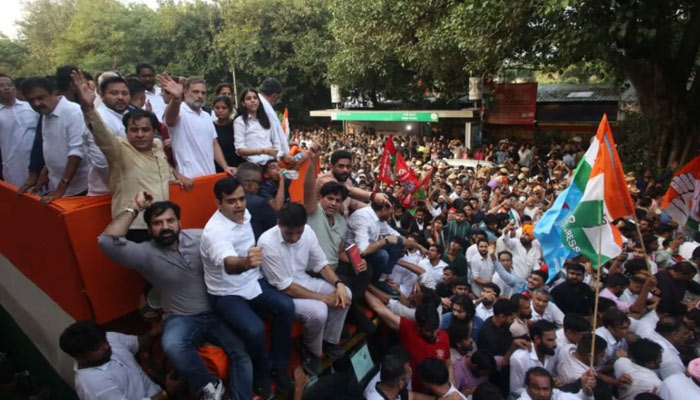
SIR Protests, Congress-CJP Unity and UP Elections: BJP Faces Fresh Political Test
The intensifying protests over the Special Intensive Revision (SIR) of electoral rolls and the growing bonhomie between the Congress and the Cockroach Janta Party (CJP) have created fresh political challenges for the Bharatiya Janata Party (BJP). With crucial Assembly elections approaching in Uttar Pradesh and Punjab, the ruling party is increasingly concerned about the Opposition’s renewed coordination and its ability to shape the national political narrative.
Although BJP leaders continue to question the political impact of the protests against Chief Election Commissioner (CEC) Gyanesh Kumar, some acknowledge that the demonstrations reflect wider public discontent. Unemployment, inflation, rural distress and uncertainty in financial markets are adding to the challenges confronting the government.
Party insiders believe the Opposition’s ability to bring these concerns into the public spotlight, alongside its campaign over the electoral process, could give it a strategic advantage ahead of the upcoming elections.
The BJP’s recent victories, including its performance in Gujarat’s local body elections, have struggled to command similar attention amid the growing controversy over SIR. While party leaders maintain that the protests have not significantly affected Prime Minister Narendra Modi’s popularity, they are concerned that the campaign could raise questions among voters about the credibility of the electoral system.
Congress-CJP Bonhomie Strengthens Opposition’s Campaign
The Opposition INDIA bloc has received a boost from the Congress’s renewed emphasis on unity, with Rahul Gandhi openly backing CJP leaders facing action over their participation in protests against the SIR exercise.
On Wednesday, Rahul criticised the Modi government after CJP leaders Saurav Das and Ashutosh Ranka were sent to judicial custody. In a post on X, he said, “Waving the Tricolour at Jantar Mantar in a peaceful protest is not a crime. Jailing youth for it is an act of cowardice.”
CJP founder Abhijeet Dipke responded by thanking Rahul for speaking out against what he described as the illegal arrest of his colleagues.
The exchange highlighted the growing political understanding between the Congress and CJP, giving the Opposition another opportunity to present a united front against the government.
Several opposition leaders in Delhi have described their protests as successful in attracting public attention. However, they acknowledge that maintaining momentum and converting the campaign into electoral support will require sustained organisational efforts.
BJP Worries About Broader Public Discontent
BJP leaders have largely dismissed the demonstrations as a social media-driven campaign, but some concede that the unrest reflects frustrations extending well beyond the SIR controversy.
A senior BJP MP pointed to unemployment among young people, uncertainty over investments among middle-class households and rising prices as issues that could influence public sentiment. Rural communities, too, continue to face economic challenges, while international developments and market volatility have added to the uncertainty.
The MP argued that the Opposition’s concentration on SIR could work in the BJP’s favour by keeping other issues out of the spotlight. The ongoing festival season was also expected to shift public attention away from the demonstrations.
However, the BJP is aware that the Opposition could use the Winter Session of Parliament, expected to begin in the third week of November, to raise a wider range of questions about the economy, governance and electoral reforms.
A senior party leader indicated that the BJP could launch a public outreach campaign to address concerns and explain the SIR exercise, seeking to counter doubts surrounding the voter-roll revision process.
Opposition Unity Puts Government’s Legislative Plans Under Pressure
The changing political atmosphere has also complicated the government’s legislative agenda.
In April, a constitutional amendment Bill seeking to advance the implementation of women’s reservation to 2029, alongside a proposal to expand the Lok Sabha from its existing strength of 543 members to as many as 850 through delimitation, was defeated in the House during a special session.
Two other significant Bills remain pending amid disagreements among political parties.
The 130th Constitution Amendment Bill proposes the automatic removal of ministers who remain arrested or detained for more than 30 days in connection with serious offences. The Viksit Bharat Shiksha Adhishthan Bill, 2025, seeks to restructure the country’s higher education regulatory system.
Joint parliamentary committees examining the proposals have yet to finalise their reports, with differences among parties holding up progress.
A BJP insider said the Opposition had been divided into several groups when the Monsoon Session began on July 20, but its current coordination has changed the political equation. The growing camaraderie, the source acknowledged, poses a challenge to the government’s legislative priorities.
Cabinet Reshuffle on the Cards Ahead of Electoral Battles?
The possibility of a Cabinet reshuffle has also entered the political discussion following Union minister L. Murugan’s resignation from the government and the Rajya Sabha.
Some BJP leaders believe that bringing fresh faces into the ministerial team could help the party regain momentum and strengthen its public image ahead of the next round of Assembly elections.
With Uttar Pradesh and Punjab among the states preparing for crucial electoral contests, the BJP will need to manage the SIR controversy while addressing economic anxieties and countering the Opposition’s increasingly coordinated campaign.
The central challenge for the ruling party is to prevent the protests from developing into a broader movement around electoral credibility and public dissatisfaction. For the Opposition, the test will be whether its current unity can endure beyond the immediate controversy and translate into a tangible electoral advantage.
Comments are closed.