

6 Climate Disasters That Shook India in 2025.
India is living through the climate crisis — not as a distant threat, but as a daily reality. This year brought a cascade of shocks: snowless winters in the north, record-breaking heat in cities, devastating floods across multiple states, and pollution levels that remain among the world’s worst.
Here are six major climate events that hit India hard in 2025:
1. Kashmir’s Winter Without Snow
The year opened with an eerie silence in Gulmarg — no snowfall, no skiers, no winter wonderland. For the first time in years, the Kashmir Valley saw an almost snowless winter.
The impact wasn’t just on tourism. The lack of snow disrupted the natural cycle of snowmelt that feeds rivers and sustains crops. Water shortages loomed, and the dry forests became tinderboxes for fires. Scientists blamed warming trends and increasingly erratic precipitation — signs of a shifting Himalayan climate.
2. Monsoon Havoc in Himachal Pradesh
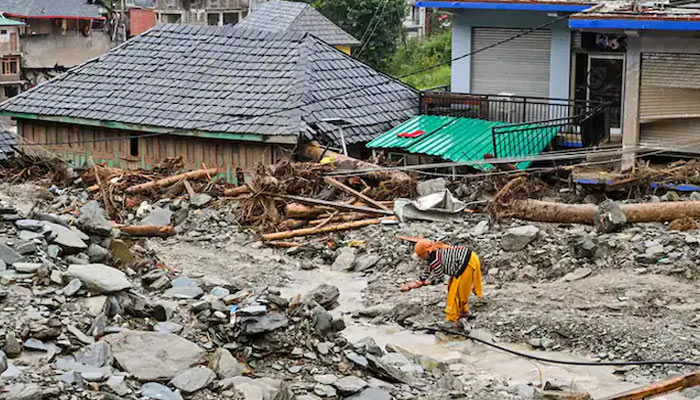
Monsoon season turned deadly in the hills of Himachal Pradesh. Flash floods, landslides, and cloudbursts killed at least 109 people and destroyed infrastructure worth over ₹883 crore.
More than 1,200 cattle and over 21,000 poultry were lost. The scale of the destruction exposed how climate extremes and unchecked development in ecologically sensitive areas are creating disaster-prone landscapes.
3. Northeast Inundated — Again
Over 500,000 people across Assam, Manipur, Tripura, Arunachal Pradesh, Meghalaya, and Sikkim were impacted by intense flooding and landslides. Mizoram alone recorded over 400 landslides — half of the region’s total.
Floods are annual events in the Northeast, but the frequency and severity have escalated. Experts point to deforestation, hill-cutting, and poorly planned infrastructure in one of India’s most fragile ecological zones.
4. Heat and Rainfall Extremes from El Niño–La Niña Swings
India’s weather is becoming increasingly volatile, driven by stronger El Niño and La Niña phases. These oceanic patterns are now supercharged by climate change, triggering extremes on both ends — searing heat and sudden deluges.
States from Rajasthan and Gujarat to Odisha and Manipur experienced the “climate double blow” — extreme heat followed by sudden, damaging rainfall. By 2030, over 80% of Indian districts could face these concurrent threats, say experts.
5. Cities Choke in Prolonged Heatwaves
This year, summer started in February and lingered into November. Cities like Delhi, Mumbai, Patna, and Chennai faced more frequent and intense heatwaves than ever before.
A study by IPE Global and Esri India projects a twofold increase in heatwave days for major cities. The report also warns that 72% of India’s tier-I and tier-II cities will see a dangerous rise in heat stress, often coupled with storms, lightning, and hail.
6. Air Pollution: Still Among the World’s Worst
Despite a slight improvement, India remains one of the world’s most polluted countries. The IQAir 2024 report ranked Delhi as the most polluted capital city globally for yet another year.
India saw a 7% dip in PM2.5 levels, but six of the world’s ten most polluted cities are still here. With an average concentration of 50.6 µg/m³ — ten times the WHO’s safe limit — air pollution continues to be a deadly, slow-burning climate emergency.
A Wake-Up Call, Not Just a List
These six events aren’t isolated. They’re signals of a deeper, more dangerous transformation underway across India’s climate landscape. From snow to storms, from floods to furnace-like cities — the time for slow action is long past.
The future is arriving faster than we thought. And it’s wearing the face of a crisis we can no longer ignore.
Comments are closed.