
Students, Opposition Protest Against Balen’s India Remarks, Seek His Exit

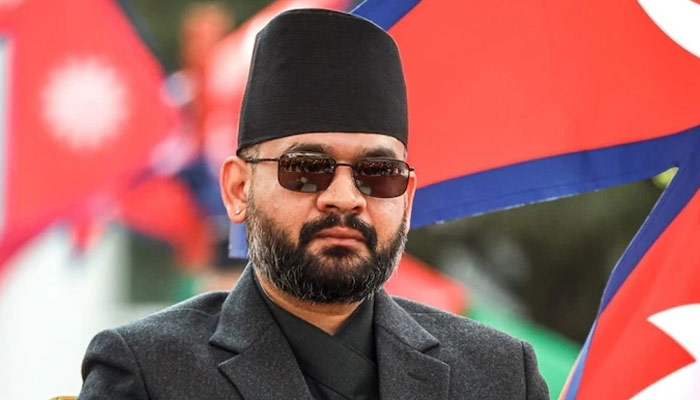
Nepal PM Balen Shah Under Fire As India Border Remarks Trigger Protests, Resignation Calls
Nepal Prime Minister Balendra Shah is facing a political storm after comments on the India-Nepal border dispute sparked nationwide criticism, street protests and demands for his resignation.
The controversy began after Shah told Parliament that border encroachment was not solely India’s responsibility and that Nepal may also have crossed into Indian territory at certain locations. The remarks immediately drew sharp reactions from opposition parties and student organisations, which accused the Prime Minister of undermining Nepal’s long-standing territorial claims.
Remarks Spark Political Backlash
Speaking during a parliamentary discussion on Nepal’s border dispute with India, Shah argued that the issue should be addressed through facts, historical records and technical expertise rather than political rhetoric.
He reportedly called for historians, surveyors and other experts to play a greater role in resolving the disagreement and suggested that both countries should examine historical documents and diplomatic records to better understand the dispute.
However, critics viewed the comments as a departure from Nepal’s established position on contested border areas and accused Shah of weakening Kathmandu’s negotiating stance.
- India Reaffirms Its Position
- The remarks also prompted a response from New Delhi.
India’s Ministry of External Affairs reiterated that all boundary-related issues between the two countries are bilateral matters and should be resolved through existing diplomatic mechanisms. New Delhi also rejected any suggestion of third-party involvement.
India has consistently maintained that Kalapani, Lipulekh and Limpiyadhura are integral parts of the country and has repeatedly stated that its position on the issue remains clear and unchanged.
- Students, Opposition Take To Streets
- Public anger quickly spilled onto the streets of Kathmandu.
Student groups organised demonstrations at Maitighar Mandala, one of Nepal’s most prominent protest sites, accusing the Prime Minister of making anti-national remarks. Protesters carried banners defending Nepal’s sovereignty and demanded that Shah retract his comments.
The backlash soon widened beyond student groups. Opposition parties and affiliated youth organisations also staged demonstrations, describing the Prime Minister’s remarks as irresponsible and damaging to Nepal’s national interests. Inside Parliament, lawmakers from opposition parties disrupted proceedings, demanded an apology from Shah and called for his remarks to be removed from official records.
Several political leaders went further, demanding the Prime Minister’s resignation.
Foreign Ministry Issues Clarification
Amid the growing controversy, Nepal’s Foreign Ministry attempted to clarify the Prime Minister’s remarks.
The ministry said Shah was referring to practical border-management issues in no-man’s-land areas and locations affected by natural changes such as shifting river courses, rather than making any concession regarding Nepal’s claims over disputed territories.
Officials stressed that technical and diplomatic discussions between Nepal and India on boundary matters remain ongoing. Despite the clarification, opposition parties continued to criticise the government, arguing that the remarks had already caused political damage.
Why Kalapani, Lipulekh And Limpiyadhura Matter
The dispute centres on Kalapani, Lipulekh and Limpiyadhura, a strategically significant region located near the India-Nepal-China tri-junction. The disagreement traces its origins to the 1816 Treaty of Sugauli, signed after the Anglo-Nepalese War. While the treaty identified the Kali River as Nepal’s western boundary, the two countries differ on the river’s exact source.
Nepal argues that the river originates at Limpiyadhura, placing the disputed territory within Nepal. India maintains that historical maps, surveys and administrative records support its claim and currently administers the area as part of Uttarakhand. The issue gained renewed prominence in 2020 after India inaugurated a road leading to Lipulekh Pass, an important route for trade and pilgrimages to Mount Kailash in Tibet.
A Difficult Moment For Nepal’s New Leader
The controversy marks one of the most significant political challenges yet for Shah, who rose from being an independent mayor and anti-establishment figure to Nepal’s highest elected office. Having built his reputation on challenging traditional political elites, Shah now finds himself facing protests and political opposition of the kind that once helped fuel his own rise.
With Parliament disrupted, opposition pressure mounting and public anger still visible, the border remarks have quickly evolved into a broader test of Shah’s political judgment and leadership.
Comments are closed.