
Study Links Rising Brain-Eating Amoeba Threat to Climate Change
The free-living amoebae, also known as brain-eating amoebae, are becoming a growing global public health threat, warned a new study.

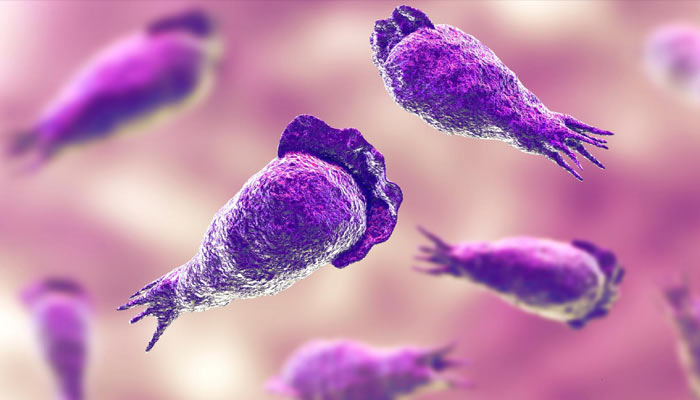
Free-living amoebae—often referred to as brain-eating amoebae—are emerging as a growing global public health threat, with climate change, ageing water infrastructure, and gaps in monitoring contributing to their spread, a new study has warned.
The study, published in the journal Biocontaminant, found that these organisms can survive in water systems that are typically considered safe, posing challenges for detection and control.
“What makes these organisms particularly dangerous is their ability to survive conditions that kill many other microbes,” said corresponding author Longfei Shu of Sun Yat-sen University, China. “They can tolerate high temperatures, withstand strong disinfectants such as chlorine, and persist within water distribution systems.”
Amoebae are single-celled organisms commonly found in soil and water. While most species are harmless, some can cause severe infections. Among the most well-known is Naegleria fowleri, which can cause a rare but usually fatal brain infection when contaminated water enters the nose during activities such as swimming. In recent years, cases linked to Naegleria fowleri have also been reported in Kerala.
The researchers also highlighted that amoebae can act as hidden carriers for other pathogens. By harbouring bacteria and viruses within their cells, they may shield these microbes from disinfection and enable them to persist in drinking-water systems. This “Trojan horse” effect could also play a role in the spread of antibiotic resistance, the study said.
According to the authors, rising global temperatures are likely to expand the geographic range of heat-tolerant amoebae into regions where they were previously rare. Recent outbreaks associated with recreational water use have already drawn public attention in several countries.
The study called for a coordinated One Health approach, linking public health, environmental science, and water management. The researchers recommended stronger surveillance, improved diagnostic tools, and advanced water treatment technologies to reduce risks before infections occur.
“Amoebae are not just a medical issue or an environmental issue,” Shu said. “They sit at the intersection of both, and addressing them requires integrated solutions.”
Comments are closed.