
Study Reveals Antarctic Ocean Triggered Major Carbon Pulse After Ice Age

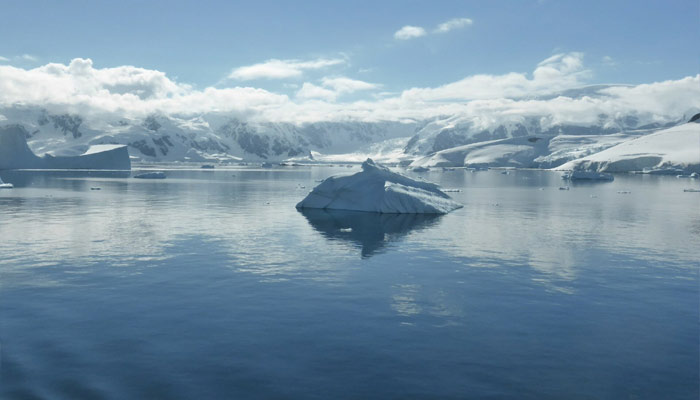
The end of the last Ice Age, roughly 12,000 years ago, brought a major reorganisation of Antarctica’s deep-ocean circulation, triggering the release of large amounts of ancient carbon into the atmosphere.
Scientists say this carbon pulse played a key role in warming the early Holocene. As Antarctic Bottom Water (AABW) expanded, it displaced long-isolated, carbon-laden deep waters, allowing their stored greenhouse gases to escape.
How Antarctic circulation unlocked ancient carbon
A new study published in Nature examined nine sediment cores from the Southern Ocean, taken from depths of 2,200 to 5,000 metres across the Atlantic and Indian sectors. By analysing neodymium isotope ratios — a chemical tracer of deep-water origins — researchers reconstructed circulation changes over the past 32,000 years.
The data show that, during the Ice Age, deep waters in the Southern Ocean were largely stagnant. This isolation allowed carbon to build up for millennia. When circulation later strengthened, newly formed AABW began flushing out these old water masses, releasing their stored carbon to the atmosphere and contributing to the rapid climatic shift that followed the Ice Age.
Comments are closed.