
Swiss Glaciers Cross Yearly Melting Limit Weeks Early, Scientists Warn

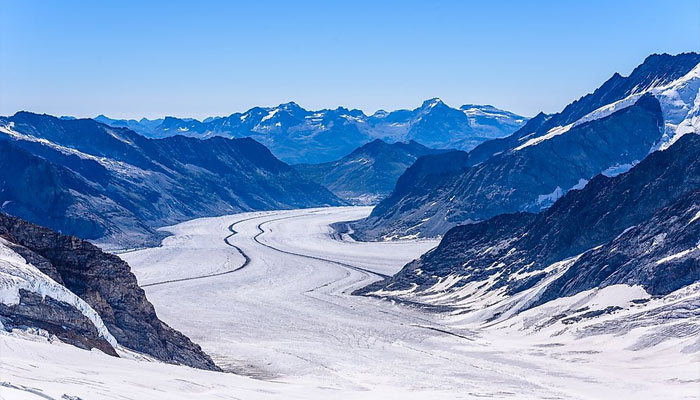
Swiss Glaciers Reach Critical Melting Point Weeks Early in Grim Climate Warning.
Switzerland’s glaciers have reached their annual melting threshold significantly ahead of schedule, marking the second-earliest “glacier loss day” on record and raising fresh alarms about the accelerating impact of climate change.
The milestone — recorded on July 4 — means all the snow and ice accumulated during the past winter has already melted away. Any additional melt in the coming weeks will result in irreversible loss of glacier mass, according to Glacier Monitoring in Switzerland (GLAMOS).
“In a healthy system, this day wouldn’t come until September — or wouldn’t come at all,” said GLAMOS head Matthias Huss. “Reaching it in early July is another alarm call. It’s like the glaciers are shouting: ‘We’re disappearing. Help us.’”
Melting Season Begins Alarmingly Early
In a typical year this tipping point arrives in mid-August, already considered too early by glaciologists. But this year’s early snow depletion sets the stage for a prolonged and destructive melt season, with bare glacier ice now fully exposed to summer heat.
“From now on, we’re in the red zone — every day just deepens the loss,” said Huss.
The only earlier glacier loss day occurred in 2022, on June 26, a year scientists believed was a statistical outlier. The return of such conditions just two years later has stunned experts.
“We thought 2022 was an anomaly. We didn’t expect to see this kind of extreme melt again so soon,” Huss said.
Low Snow, High Heat to Blame
The early arrival has been attributed to poor snowfall this past winter and record warmth in June, which was Switzerland’s second-hottest June on record. These conditions left glaciers vulnerable to melting far earlier than normal.
Once the white snow layer is gone, the darker ice beneath absorbs more sunlight, accelerating the melt. “With the same amount of solar radiation, we can now melt more ice,” Huss warned — describing a feedback loop that worsens the crisis.
A Pattern of Collapse
Glaciers in the Swiss Alps have been retreating for nearly two centuries, but melting has dramatically accelerated in the last few decades. Between 2000 and 2024, Swiss glaciers have lost an estimated 38% of their total volume.
GLAMOS tracks a dozen reference glaciers across the Alps to monitor such tipping points. This year’s data confirms that 2024 is shaping up to be another devastating year, with additional heatwaves in July and August likely to compound the damage.
Threat Beyond the Alps
The stakes extend far beyond Switzerland. Glaciers in the Alps are a vital source of fresh water for millions of people. Major European rivers like the Rhine and Rhone are partly fed by glacier runoff — water that may become increasingly scarce in coming decades.
“If this trend continues,” Huss said, “the long-term stability of our water supply, ecosystems, and landscapes will all be at risk.”
Comments are closed.