
Tharoor Suggests Distinct Aadhaar Cards for Non-Citizens to Verify Citizenship

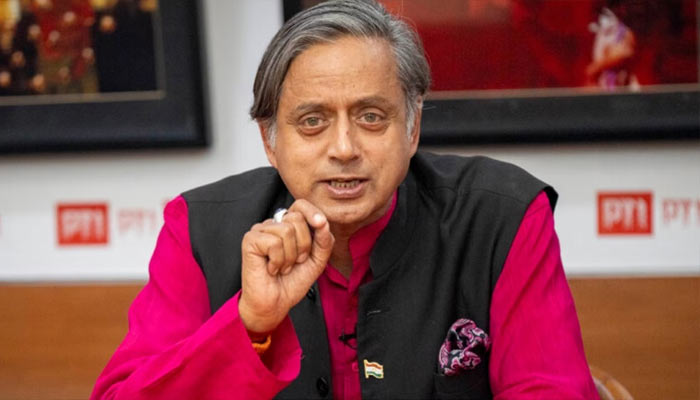
Congress leader Shashi Tharoor has proposed a legal overhaul to remove ambiguity over proof of Indian citizenship, arguing.
That both passports and Aadhaar cards should serve as conclusive evidence of citizenship while suggesting a separate, visually distinct Aadhaar card for non-citizens. His remarks came after the Centre clarified that an Indian passport, by itself, is not definitive proof of citizenship—a position that has sparked public debate.
In a post on X, Tharoor said the government’s explanation, based on Section 20 of the Passports Act, 1967, may be legally sound but fails the test of common sense. “While the government defends this as a long-standing legal position rooted in Section 20 of the Passports Act of 1967… this is a distinction without a difference, meaningless to the average citizen,” he wrote.
The Thiruvananthapuram MP questioned what document could establish citizenship if not a passport, which is issued only after extensive verification. He also cited the Supreme Court’s recent observation that Aadhaar is proof of identity and residence, but not of citizenship.
Calling for what he described as a “common sense legislative overhaul”, Tharoor proposed amending the law to make both passports and Aadhaar cards legally conclusive proof of Indian citizenship unless revoked by the government.
He acknowledged, however, that Aadhaar is currently issued on the basis of residency rather than nationality, making it available to both Indian citizens and eligible non-citizen residents. To bridge that gap, Tharoor suggested that the Unique Identification Authority of India (UIDAI) issue a visually distinct Aadhaar card for non-citizens.
“The solution is straightforward. The UIDAI should introduce a visually distinct Aadhaar card, featuring, say, a visible diagonal red stripe across the front, specifically designated for non-citizens living in India,” he said. According to Tharoor, clearly distinguishing citizen and non-citizen Aadhaar cards would allow the government to recognise a standard Aadhaar card or a valid Indian passport as sufficient proof of citizenship.
He argued that such a system would simplify domestic identity verification, reduce disputes during exercises such as electoral roll revisions, and provide Indians with “absolute, unquestionable legal certainty” regarding their citizenship.
Comments are closed.