
“The Aravalli Story: Why India’s Oldest Mountains Matter Today”

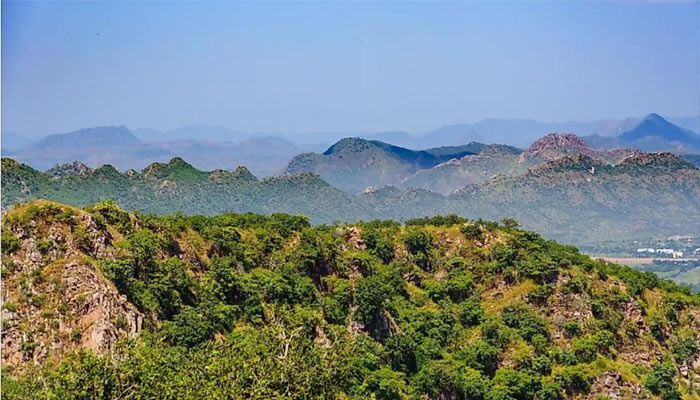
Aravalli Hills Controversy: Why India’s Oldest Mountains Are in the Legal Spotlight.
The Aravalli Hills – among the world’s oldest mountain ranges and a vital ecological zone that sustains biodiversity, replenishes groundwater, and regulates northern India’s climate – are at the centre of a legal and political storm. The dispute arose after the government narrowed the definition of what constitutes the Aravalli Hills.
The Government’s Position
Officials argue the change resolves inconsistencies in how Rajasthan, Haryana, Gujarat, and Delhi define the range. Conflicting definitions, the government says, led to confusion over mining permissions and spurred illegal operations, some of which were exposed in a WNS report on December 6.
Under the new definition, only landforms rising 100 meters or more above the surrounding terrain are considered part of the Aravalli Hills. Environmentalists warn that the remaining terrain – estimated at 91% of the range by a Forest Survey of India study – could be opened to mining, worsening air pollution, depleting water resources, and devastating ecosystems. The government has disputed the 91% figure but has not provided an alternative estimate.
Supreme Court Intervention
After public outcry and scientific pushback, the Supreme Court stayed its November 20 order approving the new definition. A vacation bench led by Chief Justice Surya Kant directed that the recommendations and earlier directions be held in abeyance and ordered a new committee to reassess the definition and its implications.
The Core Issue
In essence, the debate is about balancing environmental protection with controlled mining. The Aravallis act as a natural barrier that protects Delhi from desertification, while the hills also hold strategic minerals like copper, silver, gold, thorium, tungsten, lithium, and rare-earth elements.
Historical Context
Concerns over the Aravallis are not new. The Supreme Court has repeatedly intervened to enforce a sustainable mining framework. Even legally licensed mining in Haryana, Rajasthan, and Gujarat has caused serious environmental damage, including water scarcity, river depletion, and deforestation. Illegal operations often compound the problem, aided by lax enforcement and corruption.
Human and Environmental Costs
Mining and blasting pose severe risks to nearby communities. Cases include a 7-year-old suffering a head injury from flying debris and a 14-year-old losing fingers after mistaking detonators for berries. Dust pollution has led to silicosis, skin diseases, and declining crop yields along the 692 km stretch of the hills.
Political Fallout
The issue has ignited political debate. Congress chief Sonia Gandhi called the revised definition a “death warrant” for the hills, while former environment minister Jairam Ramesh warned of “grave environmental and public health consequences.”
The Aravalli Hills controversy highlights the urgent need for a science-based, enforceable framework that protects both India’s natural heritage and its mineral resources.
Comments are closed.