
Tracking icebergs with AI promises new gains for science
Using satellite images, the tool captures the distinct shape of icebergs as they break off -- or calve -- from glaciers and ice sheets on land.

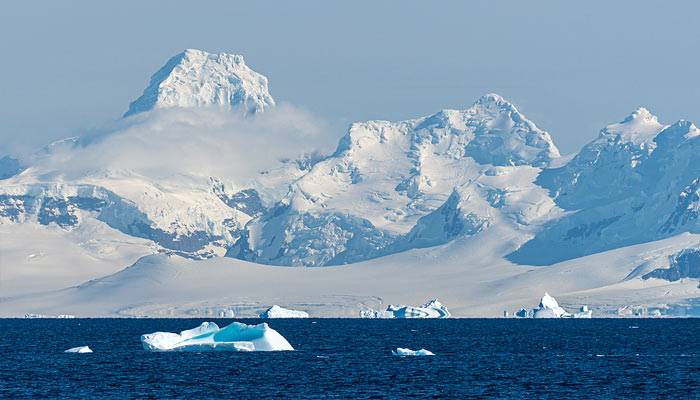
British scientists on Thursday announced a world-first artificial intelligence tool designed to catalogue and track icebergs as they break into smaller fragments, a development they say could close a major gap in climate-change forecasting.
Icebergs release huge volumes of freshwater as they melt in open oceans, influencing climate systems, ocean currents and marine ecosystems. However, once large icebergs fracture into thousands of smaller pieces, scientists have struggled to follow their movement and assess their cumulative impact.
The new system, developed by the British Antarctic Survey (BAS), automatically identifies and names icebergs at the point they calve from glaciers or ice sheets, then tracks their progress — sometimes over decades — until they fully melt.
Using satellite imagery, the AI captures the unique shape of each iceberg at birth. As the ice breaks apart, the system links the smaller “child” fragments back to their original “parent”, creating detailed iceberg family trees at a scale not previously possible.
Researchers said the technology marks a major improvement over existing methods, which rely on manual analysis of satellite images and typically track only the largest icebergs.
Tested using satellite data over Greenland, the system provides what BAS described as vital new information for climate scientists, improving estimates of where and how freshwater enters the oceans — a factor expected to grow in importance as global temperatures rise.
“This finally gives us the observations we’ve been missing,” said Ben Evans, a machine-learning specialist at BAS. “We’ve gone from tracking a handful of large icebergs to following every fragment, allowing us to see where they come from, where they go and why that matters.”
Scientists said the technology could also be adapted to improve maritime safety by helping ships navigate iceberg-strewn polar waters.
Iceberg calving is a natural process, but researchers warn that ice loss from Antarctica is increasing, likely driven by human-induced climate change, making accurate tracking increasingly important.
Comments are closed.