
Trump Approves Legislation to Conclude Record-Breaking US Government Shutdown

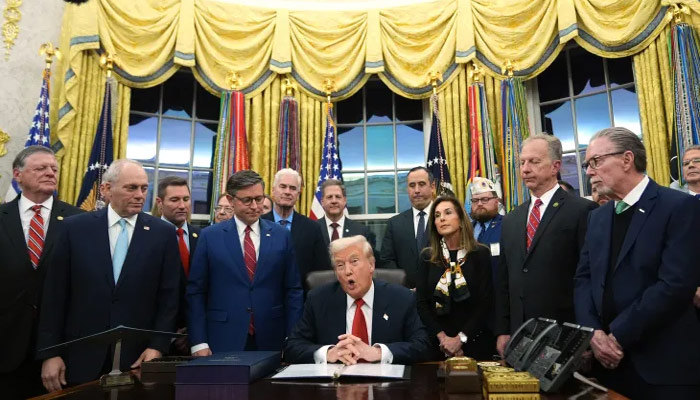
US President Donald Trump on Wednesday signed a stopgap funding bill, officially ending the record 43-day government shutdown — the longest in US history.
The move brings relief to hundreds of thousands of federal workers and restores key public services that had been paralyzed for weeks. “Today we are sending a clear message that we will never give in to extortion,” Trump said before signing the measure in the Oval Office, drawing applause from Republican lawmakers present at the ceremony.
The shutdown, which began on October 1, had left federal agencies without funding, caused flight delays, and forced many workers to depend on food banks as paychecks were halted.
Bill Extends Funding Until January 30
The House of Representatives passed the funding bill 222–209 earlier in the day, following its approval by the Senate earlier this week. The legislation funds the government through January 30, preventing an immediate repeat of the crisis but keeping fiscal pressures high as the national debt nears $38 trillion.
The measure reverses the firing of federal workers that occurred during the shutdown and guarantees full back pay once operations resume. It also allocates additional funding — including $203.5 million for lawmakers’ security and $28 million to protect Supreme Court justices.
Impact of the Shutdown
Over 800,000 federal employees were furloughed or forced to work without pay during the shutdown. Air travel was severely disrupted, with over 10,000 flight delays and 3,000 cancellations, while economic losses were estimated at over $7 billion.
The shutdown also delayed vital data releases from US economic agencies, creating uncertainty for businesses and investors.
With federal offices set to reopen as early as Thursday, services such as food aid, airport operations, and statistical reporting will gradually return to normal. Economists say the move offers short-term stability, though the temporary nature of the bill means another budget standoff could occur early next year.
Comments are closed.