

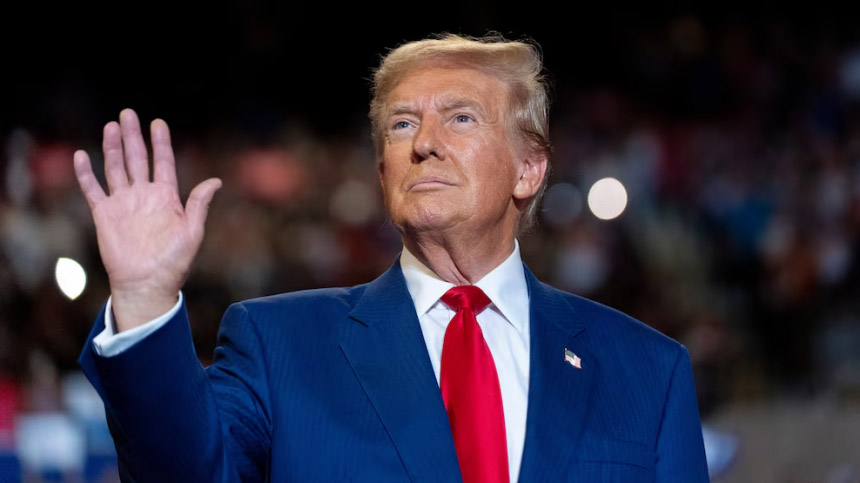
U.S. President Donald Trump reiterated his claim that he brokered a ceasefire between India and Pakistan in May 2025, asserting that trade incentives and threats were pivotal in halting the conflict. Speaking at a press event, Trump stated, “We stopped a lot of fights, very, very big one was India and Pakistan. We stopped that over trade,” as reported by The Times of India and posts on X. However, India’s Ministry of External Affairs (MEA) firmly denied any U.S. mediation or trade discussions, insisting the ceasefire was negotiated directly between the Indian and Pakistani militaries. This dispute, rooted in the aftermath of India’s Operation Sindoor, highlights tensions over U.S. involvement in South Asia’s volatile geopolitics and India’s stance on bilateral resolutions.
Trump’s Claims and India’s Rebuttal
Trump’s remarks on July 15, 2025, echoed his earlier statements from May 2025, when he announced a “full and immediate ceasefire” on Truth Social, claiming U.S. mediation following four days of intense India-Pakistan clashes sparked by a terrorist attack in Indian-administered Kashmir on April 22, 2025, that killed 26 tourists. Trump credited trade leverage, stating, “I said, let’s make a deal, let’s do some trading. Let’s not trade nuclear missiles,” and suggested he threatened to halt trade if hostilities continued, per Hindustan Times and The Hindu. He also offered to mediate the Kashmir dispute, a proposal India rejected outright, citing its policy of bilateral resolution, as noted by MEA spokesperson Randhir Jaiswal: “The issue of trade didn’t come up in any discussions with Washington.”
India’s government, led by Prime Minister Narendra Modi, emphasized that the ceasefire, effective May 10, 2025, was negotiated directly between the Directors General of Military Operations (DGMOs) of both nations at 3:35 p.m. IST, following a Pakistani request for a hotline call. Jaiswal clarified, “The force of Indian arms compelled Pakistan to stop its firing,” denying any U.S. role and asserting that India’s military action under Operation Sindoor—targeting alleged terrorist camps in Pakistan—was decisive. The Times of India reported that External Affairs Minister S. Jaishankar reiterated India’s stance that talks with Pakistan would focus solely on terrorism and the return of Pakistan-Occupied Kashmir (PoK), ruling out broader negotiations or third-party mediation.
Context of the Conflict and Ceasefire
The May 2025 conflict, the worst in decades between the nuclear-armed neighbors, erupted after India launched Operation Sindoor on May 7, targeting militant infrastructure in Pakistan linked to the Pahalgam attack, which India attributed to Pakistan-backed groups—a charge Islamabad denied. The escalation involved missile and drone strikes, with India claiming to have damaged Pakistani airbases, while Pakistan reported downing Indian jets, per The Washington Post. Over 70 deaths were reported, mostly in Kashmir, with both sides accusing each other of ceasefire violations hours after the agreement, as noted by NBC News and BBC. Despite these breaches, the ceasefire largely held by May 11, 2025, restoring calm along the border.
Trump’s narrative of averting a “nuclear war” through trade threats has been contentious, with Indian officials clarifying that Operation Sindoor was conventional, not nuclear, and dismissing Pakistan’s nuclear rhetoric as a bluff, per The Hindu. Posts on X, such as one by @TrulyMonica, criticized Trump for equating India and Pakistan, arguing that “a terror perpetrator and victim can’t be same,” reflecting Indian sentiment against his framing. Pakistan, however, welcomed Trump’s involvement, with Prime Minister Shehbaz Sharif thanking the U.S. for “facilitating this outcome,” per NBC News.
Geopolitical Implications
Trump’s claims have strained U.S.-India relations, with Indian analysts, like former ambassador Nirupama Menon Rao, expressing frustration at his “equating” of India and Pakistan, per The New York Times. India’s insistence on bilateralism, especially regarding Kashmir, reflects its sensitivity to third-party mediation, a stance reiterated by the Congress party’s demand for clarity on U.S. involvement, as reported by BBC. The U.S., a key trading partner with $130 billion in bilateral trade with India in 2024, is negotiating a trade deal to address its trade deficit, but India’s MEA denied any linkage to the ceasefire, per The Guardian.
The National Education Policy (NEP) 2020’s focus on international collaboration supports India’s engagement with global powers but underscores its preference for sovereignty in regional disputes. Pakistan’s economic challenges, including an IMF loan plea where the U.S. holds influence, may have made it more receptive to Trump’s diplomacy, as noted by The New York Times. However, India’s firm rebuttal signals its intent to control the narrative domestically, with Modi emphasizing military strength over external pressure, per AP News.
Looking Ahead
The ceasefire’s fragility, highlighted by early violations, remains a concern, with analysts like Michael Kugelman noting its hasty negotiation may lack robust guarantees, per BBC. Trump’s repeated claims, including on July 15, 2025, continue to irk New Delhi, which fears domestic perceptions of yielding to U.S. pressure, per The New York Times. As India and Pakistan prepare for further DGMO talks, India’s focus on terrorism and PoK, coupled with its rejection of trade-based mediation, underscores its commitment to bilateral resolutions. The episode highlights the delicate balance of U.S. influence in South Asia, where strategic and economic stakes intersect with longstanding rivalries.
Comments are closed.