

Trump Sets 25% Tariffs on Japan, South Korea; Targets 12 More Countries with New Import Taxes
Former President Donald Trump announced sweeping new tariffs on Monday, slapping a 25% tax on goods from Japan and South Korea, and escalating trade tensions with 12 additional nations as part of what he calls a “tailor-made” trade agenda.
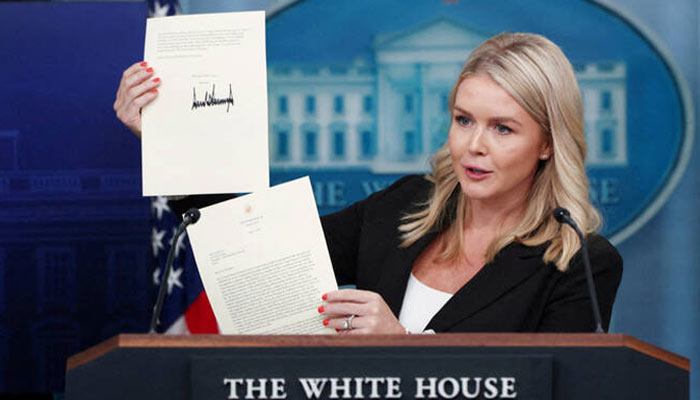
The tariffs, effective August 1, were disclosed through personalized letters Trump posted on Truth Social, addressed directly to foreign leaders. The letters warned against retaliation, threatening further hikes if any country responds in kind.
“If for any reason you decide to raise your tariffs, then whatever the number you choose will be added onto the 25 percent that we charge,” Trump wrote in nearly identical messages to Japanese Prime Minister Shigeru Ishiba and South Korean President Lee Jae-myung.
Aggressive Trade Posturing with a Familiar Playbook
The letters mark another chapter in Trump’s long-standing strategy of using tariffs as both leverage and punishment, positioning himself at the center of a high-stakes global trade drama. The move follows his signing of a massive domestic tax cut bill last Friday — which he says will be partially offset by the revenue generated from these import duties.
Countries affected in this latest tariff wave include:
Myanmar, Laos: 40%
Cambodia, Thailand: 36%
Serbia, Bangladesh: 35%
Indonesia: 32%
South Africa, Bosnia and Herzegovina: 30%
Kazakhstan, Malaysia, Tunisia: 25%
Trump’s letters framed the tariffs as generous — using the word “only” before revealing the rates — but some contained awkward errors, such as addressing Bosnia’s President Željka Cvijanović as “Mr. President,” later corrected.
White House Press Secretary Karoline Leavitt said Trump is crafting “tailor-made trade plans for each and every country on this planet,” signaling more actions to come.
Mixed Signals: Confrontation or Negotiation?
Though blunt in tone, Trump hinted that these tariffs may shift based on how relations evolve.
“These tariffs may be modified, upward or downward, depending on our relationship with your country,” he wrote.
A three-week window remains before implementation — a period the White House describes as “overtime” for trade partners to negotiate changes.
However, Wendy Cutler, vice president at the Asia Society Policy Institute and a former U.S. trade negotiator, called the moves against Japan and South Korea “unfortunate,” especially given their importance to U.S. interests in shipbuilding, semiconductors, critical minerals, and energy cooperation.
Markets Rattle, Legal Challenges Loom
The announcement spooked markets. The S&P 500 fell 0.8%, and 10-year Treasury yields rose to 4.39%, pushing up borrowing costs across sectors.
Trump invoked an “economic emergency” to bypass Congress and impose the tariffs, a move that is currently under legal challenge after a May ruling by the U.S. Court of International Trade deemed the executive branch had overreached.
Critics note the contradiction in targeting close U.S. allies like Japan and South Korea, both crucial to counterbalancing China — which is already facing a 55% tariff rate under Trump’s trade doctrine.
Trade Strategy or Political Gambit?
Trump’s new measures reflect a return to his first-term tactics, but critics argue that many of his earlier “wins” — such as the 2018 revised trade deal with South Korea and the 2019 Japan agreement — failed to meet expectations.
His recent letters also warn that any nation aligned with the BRICS bloc — including India, Brazil, China, and South Africa — will face an additional 10% tariff, signaling a broader decoupling from economies perceived as drifting from U.S. influence.
“I don’t see a huge escalation or a walk back — it’s just more of the same,” said Scott Lincicome, VP at the libertarian Cato Institute.
Funding Tax Cuts Through Tariffs?
Trump’s administration is openly relying on tariff revenue to offset the tax cuts passed on July 4, a move that could shift the burden onto consumers, as importers pass along costs in the form of higher prices.
Trump has insisted that major U.S. retailers like Walmart should absorb the additional costs — not consumers — but analysts argue such expectations are unrealistic.
“It’s unlikely that a three-week delay will be enough for meaningful negotiations,” said Josh Lipsky, Chair of International Economics at the Atlantic Council. “This signals he’s serious — this isn’t just posturing.”
Two Frameworks, Many Unfinished Talks
Despite promises of “90 deals in 90 days,” Trump has secured just two trade frameworks so far: one with Vietnam and a limited arrangement with the UK to shield it from steel and auto tariffs.
The U.S. trade deficit with Japan and South Korea remains high — $69.4 billion and $66 billion respectively in 2024 — figures Trump has long cited as justification for aggressive action.
Comments are closed.