
Trump’s Tariffs Under Scanner: 10–15% Rates, Obscure Law, and India Implications Post SC Ruling

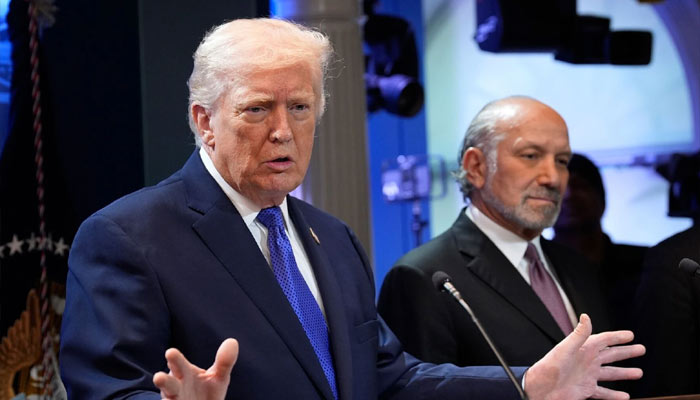
The trade battle surrounding US President Donald Trump has taken another dramatic turn after he moved to reimpose sweeping tariffs within hours of a Supreme Court setback.
After the Supreme Court of the United States struck down his earlier tariff regime as unlawful, Trump announced a fresh 10 percent global levy on Friday (February 20), only to raise it to the statutory ceiling of 15 percent a day later through a social media proclamation. Calling the ruling a “terrible decision,” he insisted his administration had “strong alternatives” that would ultimately strengthen the US economy.
What Has Changed?
The earlier tariffs — some reaching as high as 50 percent — were imposed under the International Emergency Economic Powers Act (IEEPA). The court ruled 6–3 that the law did not grant the president authority to unilaterally raise revenue, emphasising that taxation powers rest with Congress.
In response, Trump pivoted to Section 122 of the Trade Act of 1974 — a rarely used provision designed to address serious balance-of-payments deficits. Unlike IEEPA, Section 122 caps tariffs at 15 percent and limits them to 150 days unless Congress votes to extend them.
To give his trade strategy longer legs, Trump has also directed the US Trade Representative to initiate new investigations under Section 301 into alleged unfair trade practices — a process that could eventually justify more permanent, country-specific duties. Meanwhile, industry-specific tariffs under Section 232 of the Trade Expansion Act of 1962 remain in place, particularly on steel and aluminium imports.
Impact On India And Other Major Economies
For India, the shift marks a significant recalibration. Earlier “reciprocal” duties had climbed to 25 percent on many goods and as high as 50 percent on items linked to India’s purchases of Russian oil. Under the new 15 percent flat levy — set to take effect February 24 — a substantial portion of Indian exports to the US will revert to lower effective duty levels.
Other major economies such as China, South Korea and Brazil are also expected to see tariff burdens ease from previous elevated levels. However, countries including the United Kingdom, Australia and Saudi Arabia could face comparatively higher duties under the uniform structure.
Certain sectors — pharmaceuticals, aerospace and select electronics — remain exempt. However, the shift may weaken Washington’s negotiating leverage, as earlier trade concessions were extracted under the threat of now-invalidated emergency tariffs.
The Refund Dilemma
The Supreme Court ruling has also opened a legal and financial quandary over an estimated $130–175 billion in tariff revenue collected under IEEPA.
While the court invalidated the levies, it offered no roadmap for refunds, leaving the matter to lower courts. Treasury Secretary Scott Bessent has indicated that any repayment process could take months or even years, as businesses must individually file claims. More than 1,000 companies have already initiated legal action to recover funds.
Political Stakes
Politically, the ruling represents a rare institutional check on Trump’s executive authority. With midterm elections looming and Republicans defending narrow congressional margins, the judgment complicates his aggressive trade posture.
Although Trump has framed the ruling as an opportunity to deploy “better tools,” opinion surveys suggest public frustration with tariff-driven price increases. Some Republicans wary of protectionist policies may see the court’s intervention as a chance to recalibrate the party’s economic messaging.
In the immediate term, the move to a 15 percent global tariff provides temporary continuity. But the broader legal battle — and its economic consequences for countries like India — is far from over.
Comments are closed.