
Tulsi Vivah 2026: 6 Festive Sweet Delicacies To Prepare, Including Thekua And Til Laddoo

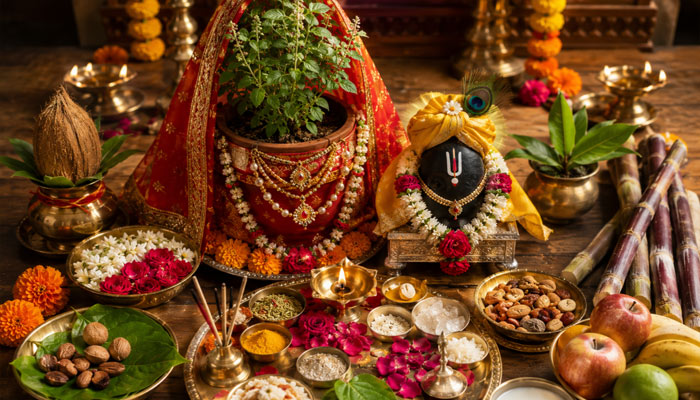
Tulsi Vivah holds a special place in Hindu tradition, symbolising the divine marriage of Goddess Tulsi and Lord Vishnu.
According to Hindu mythology, Tulsi was once Vrinda, a woman known for her extraordinary devotion and unwavering faith. Her story is remembered through this sacred wedding ceremony, which is observed with religious fervour across the country.
In 2026, Tulsi Vivah will be celebrated on Saturday, November 21, coinciding with Kartik Shukla Dwadashi. However, certain communities and households observe the ceremony on Dev Uthani Ekadashi, which falls a day earlier. The occasion signifies the conclusion of Chaturmas and is traditionally considered the beginning of the Hindu wedding season.
The festival is marked by decorating the Tulsi plant with colourful clothes, ornaments and flowers, followed by wedding rituals performed according to family traditions. Devotees also prepare special food offerings and bhog for the divine couple. Sweets are an essential part of these celebrations, with different regions bringing their own flavours and culinary traditions to the festive table.
If you are planning to celebrate Tulsi Vivah at home, here are seven traditional sweet preparations that can add a special touch to your bhog platter.
Tulsi Vivah 2026: 7 Traditional Sweets To Prepare For Bhog
1. Thekua
A popular traditional delicacy from Bihar, thekua is prepared using wheat flour, jaggery, ghee and fennel seeds. The dough is shaped into decorative pieces and deep-fried until golden and crisp. Its mildly sweet flavour and crunchy texture make it a favourite during religious celebrations. Although widely associated with Chhath Puja, thekua is also prepared for festive occasions and traditional offerings in several parts of Bihar and Mithila.
2. Til Ke Laddoo
Sesame and jaggery laddoos are particularly popular during the winter season. Made by combining roasted sesame seeds with melted jaggery, these bite-sized sweets offer a delicious combination of nutty flavours and natural sweetness. Their simple preparation and traditional significance make them a suitable addition to the Tulsi Vivah bhog platter.
3. Rice Kheer
Kheer is among the most cherished desserts prepared for Hindu religious ceremonies. This creamy delicacy is made by slowly cooking rice in milk until it reaches a rich consistency. Sugar, cardamom, almonds, cashews and saffron add flavour and aroma to the preparation. Served warm or chilled, rice kheer is a classic choice for festive bhog.
4. Mawa Peda
Mawa peda is a traditional milk-based sweet known for its soft texture and rich taste. Prepared using khoya, sugar and cardamom, it is usually shaped into small round or flattened portions. A garnish of pistachios, almonds or saffron gives the sweet an attractive festive appearance. Its convenient serving size also makes it ideal for distributing as prasad.
5. Payasam
Payasam is a traditional South Indian dessert that features prominently in religious celebrations and temple offerings. Depending on the regional recipe, it is prepared using rice, vermicelli or lentils, combined with milk or coconut milk and sweetened with sugar or jaggery. Roasted cashews, raisins and cardamom enhance its flavour. It is also associated with Ksheerabdhi Dwadashi celebrations in parts of Andhra Pradesh and Telangana.
6. Jaggery Laddoos
Jaggery-based sweets are a popular feature of traditional Indian festive cooking, especially during the colder months. Gur laddoos can be prepared using wheat flour, ghee, jaggery and dry fruits. Some variations also include sesame seeds, peanuts or roasted gram flour. These homemade delicacies bring a rustic flavour to the festive spread and can be prepared in advance for the celebrations.
7. Lai
Lai is a traditional sweet preparation popular in Bihar and parts of eastern India. Usually made by combining puffed rice or other grains with melted jaggery, it is shaped into small balls or clusters. The sweet is known for its crunchy texture and simple ingredients. In parts of Bihar and the Mithila region, traditional preparations such as lai feature among the festive offerings associated with Tulsi Vivah and the Saunja Chhappan Bhog tradition.
From crispy thekua and crunchy sesame laddoos to creamy kheer and regional favourites such as lai, these traditional sweets bring together devotion and culinary heritage. Preparing homemade delicacies for Tulsi Vivah is also a beautiful way to preserve family recipes and celebrate the festival with loved ones.
Comments are closed.