
Ukraine war, West Asia conflict among key issues in Jaishankar’s talks with EU foreign ministers

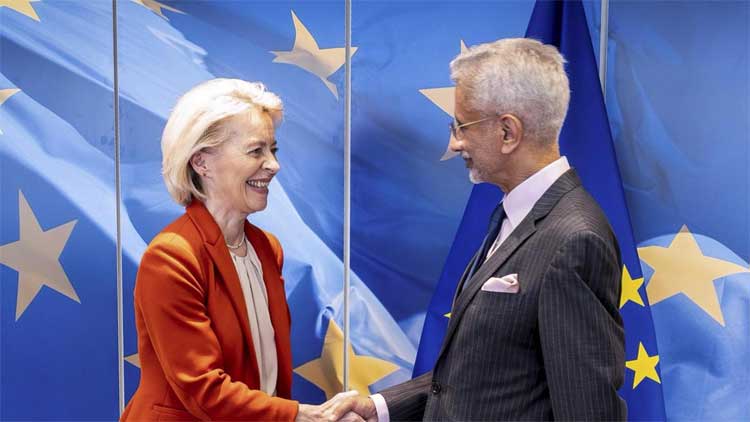
Subrahmanyam Jaishankar on Monday discussed the wars in Ukraine and West Asia, the situation in the Indo-Pacific, and the future of India’s ties with Europe during a meeting with foreign ministers from the 27 member states of the European Union in Brussels.
Jaishankar travelled to the Belgian capital at the invitation of Kaja Kallas to participate in the Foreign Affairs Council. On the sidelines, he also held separate meetings with Ursula von der Leyen and his counterparts from several EU countries, including Germany and Belgium.
Posting on social media after the meeting, Jaishankar said growing convergence between India and the EU in a multipolar world is reflected in closer consultations. “Discussed the West Asia conflict, the Ukraine situation and the Indo-Pacific in today’s gathering,” he said.
He also noted that a new chapter in India-EU relations has opened this year, with both sides working to translate recent agreements into concrete outcomes. Discussions at the Foreign Affairs Council covered trade, investment, technology, mobility and defence cooperation.
The visit was Jaishankar’s first to Brussels since India and the EU concluded a major India–EU Free Trade Agreement and several key initiatives at the India–EU Summit 2026 in New Delhi in January. These included the India–EU Security and Defence Partnership, aimed at boosting cooperation in areas such as counter-terrorism, maritime security and cyber security, as well as a framework on mobility.
Kallas told reporters that the Foreign Affairs Council also discussed ways to better protect shipping through the Strait of Hormuz, including possible contributions by the EU’s naval mission Operation Aspides. She warned that disruption in the strait is hurting the global economy, affecting partners in the region and threatening energy supplies.
Kallas also said that the international focus on the Middle East should not divert attention from the war in Ukraine, adding that easing US sanctions on Russian oil could set a “dangerous precedent”.
During his meeting with von der Leyen, Jaishankar reviewed progress on implementing outcomes from the January summit. In a social media post, he said her visit to India earlier this year had marked a “turning point” in bilateral relations and both sides were actively following up on the commitments made.
Von der Leyen said the two sides had concluded a free trade agreement — which she described as “the mother of all deals” — and signed the Security and Defence Partnership, adding that efforts are now focused on implementing these initiatives quickly for the benefit of citizens in both Europe and India.
“We also discussed developments in the Middle East and in Ukraine. De-escalation, stability and energy security are our shared objectives,” she said.
Jaishankar also held separate bilateral meetings with Johann Wadephul, Juraj Blanár, Giorgos Gerapetritis and Maxime Prévot.
The talks covered strengthening cooperation in manufacturing, semiconductors, health, defence and space, as well as expanding diplomatic engagement, improving connectivity and boosting trade and investment between India and European partners.
Comments are closed.