

More than 1,000 humanitarian workers have been killed worldwide over the past three years — nearly three times the toll recorded in the preceding three-year period — the United Nations said on Wednesday, warning of a deepening erosion of protections in conflict zones.
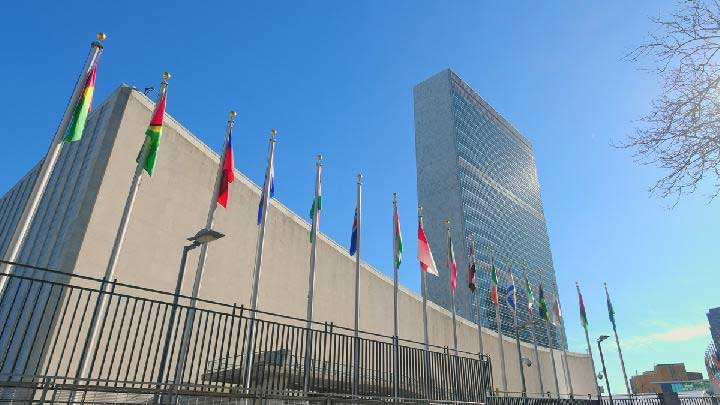
“This is not an accidental escalation — it is the collapse of protection,” UN humanitarian chief Tom Fletcher told the United Nations Security Council.
Of the more than 1,010 aid workers killed between 2023 and 2025, over half — more than 560 — died in Gaza and the West Bank. Other major tolls were reported in Sudan (130), South Sudan (60), Ukraine (25) and Congo (25). In comparison, 377 humanitarian workers were killed globally between 2020 and 2022.
The spike in deaths coincided with the war between Israel and Hamas, which began in October 2023. While a ceasefire has been in place since October 2025, sporadic violence — including shootings and airstrikes — has continued.
Fletcher noted that 2024 was the deadliest year on record, with 383 aid workers killed, while at least 326 deaths were recorded across 21 countries last year alone. Many were targeted despite operating in clearly marked convoys or on missions coordinated with authorities.
“They died in clearly marked convoys and on missions coordinated directly with authorities,” he said, underscoring the growing risks faced by those delivering food, water, shelter and medical aid.
The Security Council meeting reviewed a May 2024 resolution condemning attacks on humanitarian personnel and calling on all parties in conflict to uphold international law and ensure their protection.
In stark remarks, Fletcher questioned whether the rising death toll reflected a broader disregard for global norms. “Is international law no longer convenient? Or are these deaths being dismissed as collateral damage — or worse, are we now seen as legitimate targets?” he asked, raising concerns over accountability.
Beyond killings, he said humanitarian workers are increasingly being obstructed, detained and delegitimized. In Yemen, dozens of UN and NGO staff have been arbitrarily detained by Houthi rebels. In Afghanistan, women aid workers face bans on employment. In Gaza, access restrictions imposed by Israel have hampered relief operations, while in Ukraine, drone attacks have pushed aid workers away from front lines.
“These trends, alongside collapsing funding for lifesaving operations, point to a lawless, violent and increasingly self-interested world,” Fletcher warned.
He urged all 193 UN member states to uphold their commitments under international law, ensure accountability for attacks on humanitarian personnel, and take concrete steps to safeguard those working on the front lines of global crises.
Comments are closed.