
UN Security Council Backs Saudi Arabia’s Self-Defence Right Following Deadly Houthi Strikes on Riyadh Airport

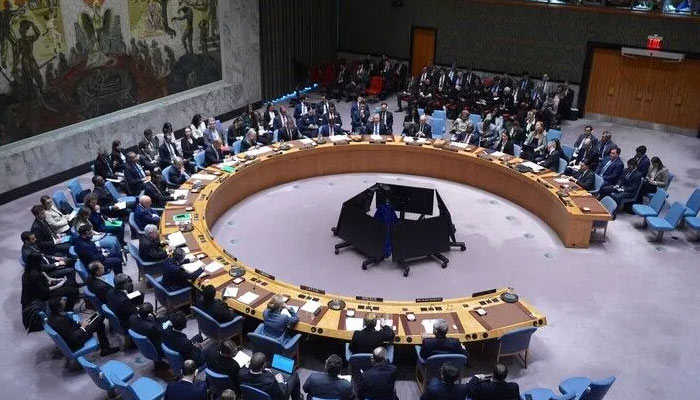
UN Security Council Backs Saudi Arabia’s Right to Self-Defence After Deadly Houthi Attacks
The United Nations Security Council on Thursday issued a strong condemnation of escalating Houthi attacks on Saudi Arabia, reaffirming the Kingdom’s inherent right to self-defence under international law following a series of deadly strikes on airports and other critical infrastructure.
In a presidential statement agreed upon by all 15 council members, the UN body particularly condemned the October 10 and 11 attacks on King Khalid International Airport in Riyadh, which reportedly killed 14 people and injured more than 300. The council also expressed concern over strikes on other airports and Saudi Aramco facilities, which disrupted civilian aviation and targeted vital energy infrastructure.
The statement marked a significant strengthening of the council’s response compared with its earlier press statements issued on August 7 and September 18. Those statements had called on the Houthis to immediately end their military escalation and stop attacks against civilians and civilian facilities.
Unlike a press statement, a presidential statement requires agreement among all Security Council members and is formally entered into the record at a public meeting, enhancing its diplomatic significance.
The council expressed solidarity with Saudi Arabia over attacks affecting civilians and civilian objects on its territory. It also conveyed condolences to the families of those killed and to the Saudi government and people, while wishing the injured a full and speedy recovery.
Condemnation Extends to Red Sea Shipping
The Security Council broadened its condemnation to include continued Houthi attacks and threats against commercial vessels operating in the Red Sea and the Bab Al-Mandab Strait.
Council members stressed the importance of protecting commercial ships and their crews, respecting navigational rights and freedoms under the United Nations Convention on the Law of the Sea, and complying with international humanitarian law.
They also urged the full implementation of Resolution 2216, adopted in April 2015, which imposed a targeted arms embargo on the Houthis. The council called for practical cooperation, including with Yemen’s government, to prevent the group from obtaining weapons, technical assistance, training and financial support that could facilitate further attacks.
All UN member states were reminded of their responsibilities under the embargo.
Reaffirming its support for Yemen’s government, the council reiterated its commitment to the country’s unity, sovereignty, independence and territorial integrity. It stressed that lasting peace in Yemen could not be secured through violence, coercion or the use of force.
The statement also backed UN Special Envoy for Yemen Hans Grundberg’s efforts to facilitate a negotiated and inclusive political settlement led and owned by Yemenis.
Deadly Strikes Across Saudi Arabia
The October 10 attack on King Khalid International Airport was described as the deadliest assault on Saudi Arabia in more than a decade. A ballistic missile struck the airport complex housing Terminals 3 and 4, with the reported death toll reaching 14 and more than 300 people injured.
Those killed included four Saudi nationals, two Bangladeshis and citizens of Egypt, Jordan, Palestine, Syria, Sudan, India and the United States.
The following day, another attack killed a Pakistani resident of Saudi Arabia and injured 11 people.
Earlier strikes had also caused casualties and damage. An October 8 attack on the Riyadh airport reportedly killed three Saudi nationals, including a pilot, destroyed a Saudia aircraft and wounded dozens.
On October 6 and 7, attacks targeting Abha International Airport and King Khalid International Airport killed two women from Algeria and Morocco and a Sudanese national, while injuring dozens of others.
The Security Council’s latest intervention highlights international concern over the growing threat to civilian lives, regional security, commercial navigation and critical infrastructure. Its call for restraint and a negotiated settlement also reinforces the need for a lasting political resolution to Yemen’s conflict.
Comments are closed.