

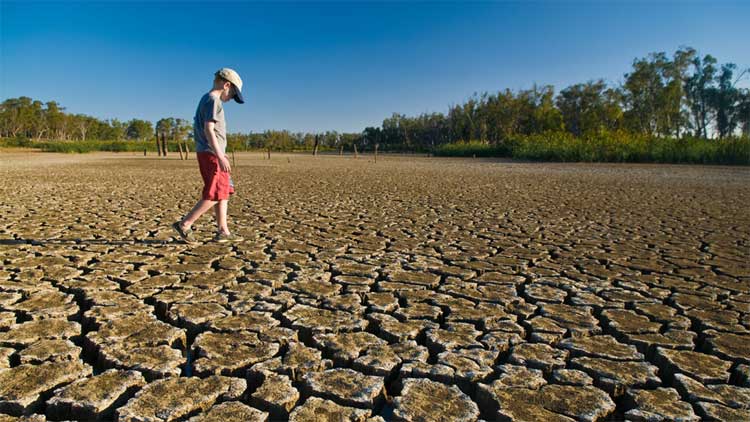
The Earth trapped a record amount of heat in 2025, the United Nations warned Monday, cautioning that the effects of this warming could persist for thousands of years.
According to the World Meteorological Organization’s latest State of the Global Climate report, the 11 hottest years on record have all occurred between 2015 and 2025. Last year ranked among the second or third warmest ever, with global temperatures about 1.43°C above the 1850–1900 baseline.
“The global climate is in a state of emergency. Planet Earth is being pushed beyond its limits. Every key climate indicator is flashing red,” said Antonio Guterres. “When history repeats itself 11 times, it is no longer a coincidence—it is a call to act.”
For the first time, the report highlights Earth’s energy imbalance—the difference between incoming solar energy and outgoing heat. In a stable climate, these remain roughly equal. But soaring concentrations of greenhouse gases such as carbon dioxide, methane, and nitrous oxide—now at their highest levels in at least 800,000 years—have disrupted that balance.
The WMO said this energy imbalance has been rising since records began in 1960, accelerating sharply over the past two decades and reaching a new peak in 2025.
WMO chief Celeste Saulo warned that human-driven disruption of the climate system will have consequences lasting centuries to millennia.
More than 90% of the excess heat is being absorbed by the oceans, where temperatures also hit record highs in 2025. The rate of ocean warming has more than doubled compared to the period from 1960 to 2005, with serious knock-on effects including marine ecosystem damage, biodiversity loss, and reduced capacity to absorb carbon.
Rising ocean temperatures are also intensifying storms and accelerating the loss of sea ice. Both the Antarctic and Greenland ice sheets continue to shrink, while Arctic sea ice coverage in 2025 ranked among the lowest ever recorded in the satellite era.
Global sea levels have risen by about 11 centimeters since satellite measurements began in 1993, with further increases expected for centuries due to ongoing ocean warming.
WMO scientist John Kennedy noted that global climate patterns are currently influenced by La Niña, a naturally occurring cooling phase in the Pacific. Conditions are expected to shift to neutral by mid-2026, with a possible El Niño forming later in the year—potentially pushing temperatures higher again in 2027.
Calling the outlook a “dire picture,” WMO deputy chief Ko Barrett said the data is meant to spur action, even as trends show little sign of improvement.
Guterres linked the climate crisis to broader global instability, warning that dependence on fossil fuels is driving both environmental and geopolitical risks. “Climate chaos is accelerating,” he said, “and delay is deadly.”
Comments are closed.