

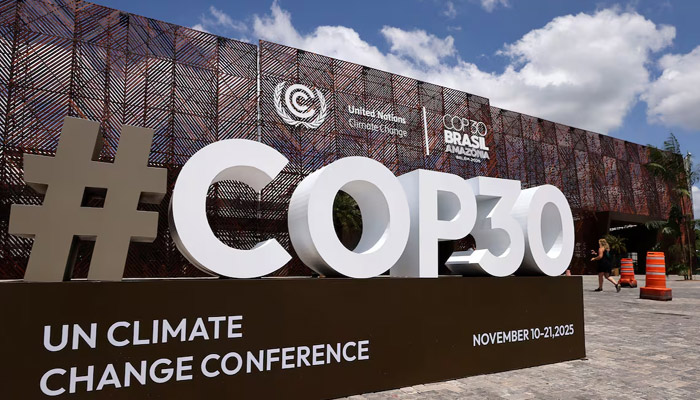
UN Warns World Still Off Track to Meet Paris Climate Goals Ahead of COP30.
Days before COP30 in Brazil, the United Nations Environment Programme (UNEP) issued a stark warning: while some progress has been made in reducing greenhouse gas emissions, global efforts remain insufficient to meet the Paris Agreement targets and avoid catastrophic climate impacts.
The 16th annual Emissions Gap Report shows that even if all current climate pledges (Nationally Determined Contributions, or NDCs) are fully implemented, the world is on track for 2.3–2.5°C of warming by 2100—down slightly from last year’s 2.6–2.8°C estimate, but still far above safe levels. Current policies alone put the planet on a path to 2.8°C, improved from last year’s 3.1°C, yet still considered catastrophic.
To stay below 2°C, emissions need to drop 35% by 2035 compared to 2019 levels. Achieving the 1.5°C target requires a 55% reduction. Instead, emissions rose 2.3% last year to a record 57.7 gigatons of CO₂ equivalent, and G20 nations—responsible for 77% of global emissions—are off track to meet their 2030 goals.
1.5°C Threshold Will Be Crossed, but Action Can Limit Damage
The report warns that a temporary breach of the 1.5°C threshold is now “inevitable,” likely within the next decade, increasing the risk of extreme weather and ice sheet melt. However, faster and deeper emission cuts could cap the overshoot at about 0.3°C and return global temperatures toward 1.5°C by 2100. UN Secretary-General António Guterres emphasized: “This is no reason to surrender. It’s a reason to step up and speed up.”
Global Response and Country Actions
Only one-third of Paris Agreement countries, covering 63% of global emissions, submitted updated NDCs by the September 30 deadline. Among G20 nations, just seven filed 2035 targets, with three more announcing them later. Collectively, the group saw a 0.7% rise in emissions in 2024.
India’s Role
India has yet to submit its updated 2035 NDC. Nevertheless, it is on track to exceed its 2030 targets, achieving 50% non-fossil power capacity ahead of schedule and expected to surpass its 45% emissions-intensity reduction goal. As the world’s third-largest emitter and a G20 member, India’s timely submission could strengthen global efforts—provided developed nations deliver promised climate finance.
Opportunities and Challenges
Clean energy adoption is surging, with falling costs of solar and wind, while proven technologies and green transitions offer economic and climate benefits. Yet geopolitical tensions, funding gaps, and outdated financial systems remain obstacles. UNEP Executive Director Inger Andersen urged major emitters to accelerate action, noting that proven solutions already exist and the time to act is now.
The report underscores that while temporary progress has been made, the world remains far from meeting the Paris climate goals. COP30 represents a critical opportunity for countries to commit to faster, deeper, and more equitable emissions reductions before the window to limit catastrophic warming closes.
Comments are closed.