
US faces setback as major European ally opts for Turkey’s KAAN jet over F-35

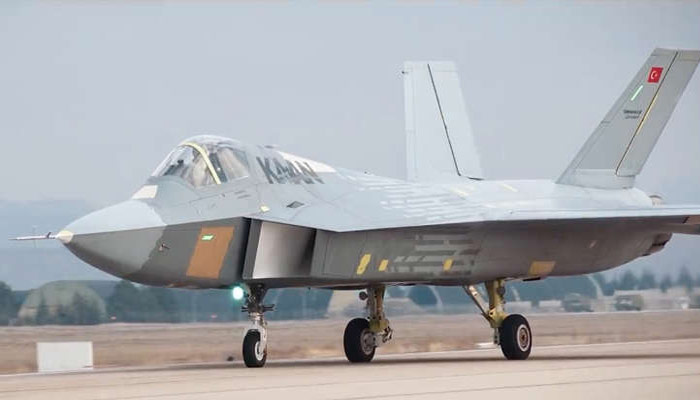
In a move that could reshape Europe’s defence landscape, Spain has reportedly declined the US F-35 stealth fighter program, instead expressing serious interest in Turkey’s indigenously developed KAAN jet.
Rising costs, software issues, and operational limitations are believed to have driven Madrid’s decision, marking a rare public setback for American military aviation influence in Europe.
According to El Economista, Spain is evaluating the KAAN fighter, designed by Turkish Aerospace Industries (TUSAS). The fifth-generation jet, which completed its maiden flight in February 2024, has gained attention for its stealth features, advanced avionics, and versatile air-to-air and air-to-ground combat capabilities.
Europe Reassesses F-35 Dependence
Spain’s move aligns with a broader European trend, as countries such as Canada, Switzerland, and Portugal reassess their participation in the F-35 program. Concerns include escalating procurement costs, frequent software glitches, and the US’s tight control over sensitive aircraft systems, which critics describe as fostering a form of “digital dependence.” The EU’s “Rearm Europe” initiative further encourages nations to reduce reliance on US defence technology, a sentiment increasingly influencing Spain’s defence planning.
KAAN: Turkey’s Emerging Export Star
Turkey’s KAAN program, led by TUSAS, is positioned as a competitive alternative to Western fighter jets. Turkey plans to induct at least 20 KAAN jets into its air force by 2028. TUSAS CEO Temel Kotil has confidently asserted that the KAAN surpasses the F-35 in several operational areas.
Internationally, Indonesia has become the first foreign buyer, securing a contract for 48 jets. Spain could become the second international customer, marking a major milestone for Turkey’s defence exports and signaling its growing stature as a global aerospace player.
Spain’s Defence Strategy Shifts
Spain had allocated €6.25 billion in its 2023 defence budget for next-generation fighter jets to replace aging F-18s and F-5s. While options initially included upgrading Eurofighter Typhoons or joining the European Future Combat Air System (FCAS) program, internal disputes between France’s Dassault and Germany’s Airbus have stalled FCAS development. Planned test flights between 2027 and 2029 are now indefinitely delayed, making KAAN an attractive alternative due to its accelerated development and regional interoperability.
Strengthening Spain-Turkey Defence Ties
Spain and Turkey have deepened defence cooperation in recent years. In December 2024, the countries signed a deal for 24 Hürjet advanced trainer aircraft, followed by Spain’s approval in September 2025 to acquire an additional 45 Hürjets worth approximately €3.68 billion. A potential KAAN acquisition would consolidate this growing partnership and reflect Spain’s shift toward diversified defence procurement.
Strategic Implications for the US
Analysts see Spain’s pivot to Turkey as a strategic blow to US influence in European air power. Once considered the benchmark for next-generation combat aircraft, the F-35 is facing increasing resistance among NATO allies. Europe’s willingness to pursue alternative technologies signals a subtle but meaningful realignment in defence priorities, reflecting broader geopolitical shifts in the post-Ukraine conflict era.
Spain’s move could mark the beginning of a trend where European nations increasingly diversify their defence supply chains, reducing dependence on traditional US platforms and opening the door for emerging aerospace players like Turkey.
Comments are closed.