
US private company launches second Moon landing mission, touchdown on March 6

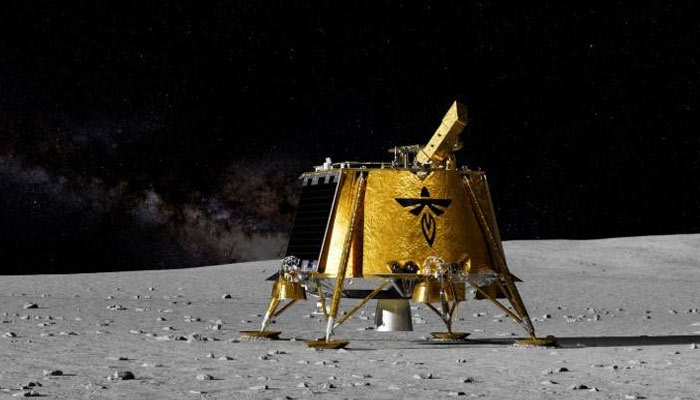
Moving an inch closer to lunar exploration, a United States-based private space company, Intuitive Machines, launched its Moon lander named Athena on Wednesday atop a SpaceX Falcon 9 rocket.
The lander, which launched from NASA’s Kennedy Space Center, will attempt a lunar touchdown on March 6. SpaceX shared visuals of the mission, confirming its deployment.
This Intuitive Machine mission, also called the IM 2 mission, is the company’s second such attempt to study the Moon. The company’s first attempt came a year back. However, it failed due to a manoeuvre failure while landing.
Athena’s missions
Athena will attempt landing on the Moon’s Mons Mouton region, which is around 160 kilometres from the Moon’s south pole and is a lunar highland terrain. After landing, Athena will deploy rovers including Intuitive Machines’ Micro Nova Hopper, named Grace. The hopper will “explore the local area” on the moon, the company said.
Grace is designed to make multiple flights to “collect science data.” However, its main highlight will be exploring a small crater that never sees sunlight, located some one-quarter of a mile (400 meters) from the landing site. This would be the first exploration of such a crater.
Athena is also expected to observe a lunar eclipse on March 14 from the moon if landed successfully. The eclipse will see the Moon, the Sun and the Earth in one line, with the planet in the middle. While people from Earth will see the moon disappear into the night sky during the eclipse, Athena, on the other hand, “will see the Sun sweep from right to left on the horizon, passing behind the Earth, before reappearing again,” said the company.
Better than before
Comparing the IM 2 with the company’s first lunar mission, Intuitive Machines’ senior vice president of spacecraft Trent Martin said that this mission “is much more complex than our first mission,” reported news agency Reuters. “The most critical piece is making sure that we land upright so that we can get on to the science and technology demonstrations that we need to do on the surface of the moon,” he added.
The launch of Athena comes amid other peer projects that are on their way to the moon. Currently, a lander by Texas-based Firefly Aerospace and another lander by Japan’s ispace are heading towards the moon. While Firefly’s Blue Ghost lander will make a touchdown attempt on Sunday, ispace’ mission will land in the coming months, the Reuters report added.
Learning from their past mistakes, the scientists at Intuitive Machine said that they have improved upon the company’s first mission to prevent any similar landing failure.
In February 2024, the company’s Odysseus lander touched down upon the lunar surface and became the first US mission in over 50 years to do so. However, it faced a hard touchdown and tipped over after one of its legs broke. According to a report by the Associated Press, this happened because an instrument that is supposed to gauge distance did not work.
“Certainly, we will be better this time than we were last time. But you never know what could happen,” AP quoted Trent Martin as saying. Learning from their past mistakes, the scientists at Intuitive Machine said that they have improved upon the company’s first mission to prevent any similar landing failure.
In February 2024, the company’s Odysseus lander touched down upon the lunar surface and became the first US mission in over 50 years to do so. However, it faced a hard touchdown and tipped over after one of its legs broke. According to a report by the Associated Press, this happened because an instrument that is supposed to gauge distance did not work.
“Certainly, we will be better this time than we were last time. But you never know what could happen,” AP quoted Trent Martin as saying.