

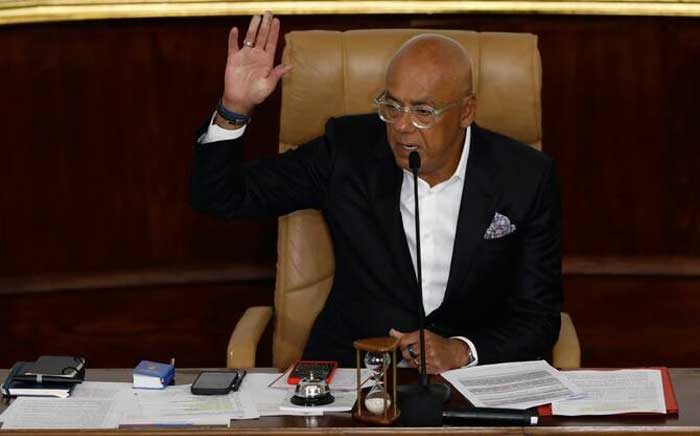
Venezuela’s National Assembly unanimously approved a long-awaited amnesty law on Thursday that could lead to the release of hundreds detained for political reasons. The law was quickly signed into effect by interim president Delcy Rodríguez, who took office after a U.S. military operation that captured then-President Nicolás Maduro on January 3, 2026.
The legislation grants general and full amnesty for crimes committed in politically turbulent periods dating back to 1999, covering events such as the 2002 coup attempt, the 2002 oil strike, protests in 2013, 2017 and 2019, and unrest related to the disputed 2024 election.
However, the law excludes individuals prosecuted or convicted for serious offenses. These exclusions include those accused of promoting, instigating, financing or participating in armed actions or the use of force against the people, sovereignty or territorial integrity of Venezuela, as well as people charged with murder, drug trafficking, corruption, human rights violations or crimes against humanity. Critics say this could bar prominent opposition figures, such as María Corina Machado, from benefiting if authorities claim they fall under these categories.
The law applies retroactively and aims to address decades of political conflict, offering hope to families that loved ones imprisoned for protest-related activity might be released. At the same time, rights groups have criticized the measure as limited and potentially exclusionary, arguing that many political detainees remain behind bars and that the amnesty might be applied unevenly.
As part of the process, a parliamentary commission will monitor implementation and tribunals must decide amnesty requests within set timeframes. While some prisoners have already been freed in recent weeks, human rights organizations estimate that hundreds remain incarcerated and fear that restrictive clauses in the new law will limit its impact.
Comments are closed.