
Volcanic Activity Possibly Sparked the Black Death, New Research Finds

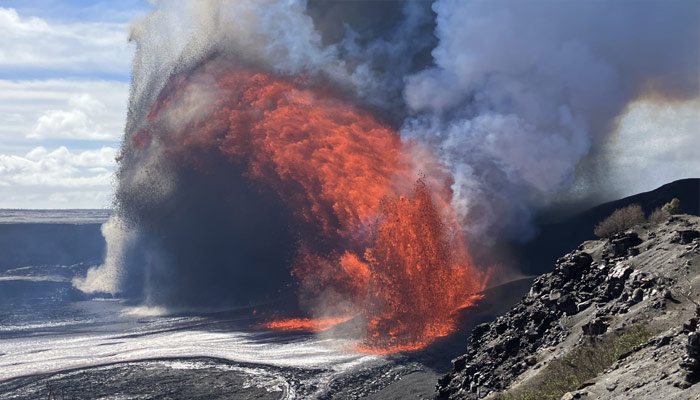
New Study Suggests Hidden Volcanic Eruptions Helped Trigger the Black Death Pandemic
Previously unknown volcanic eruptions may have set off a chain of events that eventually brought the Black Death — the deadliest pandemic in human history — to medieval Europe, new research suggests.
The bubonic plague outbreak, which devastated Europe in the mid-14th century, killed tens of millions of people and wiped out up to 60% of the population in several regions. For centuries, historians and scientists have debated how the disease reached Europe and why it spread with such unprecedented ferocity.
A new study published in Communications Earth & Environment offers a fresh explanation. Two researchers analyzing tree-ring data from Spain’s Pyrenees mountains discovered that southern Europe experienced unusually cold, wet summers between 1345 and 1347. Their analysis indicates that temperatures dropped due to reduced sunlight following one or more volcanic eruptions in 1345 — eruptions that had not been documented until now.
The resulting climate shift damaged crops, triggered widespread harvest failures, and set the stage for famine.
According to historian Martin Bauch of Germany’s Leibniz Institute for the History and Culture of Eastern Europe, Italian maritime powers such as Venice, Genoa, and Pisa responded by activating their extensive Mediterranean and Black Sea trade networks to import grain and prevent mass starvation.
However, these efforts inadvertently opened the door to disaster. Grain ships arriving from territories ruled by the Golden Horde in Central Asia — where the plague is believed to have originated — likely carried rats infested with fleas infected by Yersinia pestis, the bacterium responsible for plague.
Between 25 and 50 million people died across Europe over the next six years as the disease spread uncontrollably.
While the pandemic was shaped by a complex mix of environmental, economic, demographic, and political factors, the researchers argue that the initial volcanic eruptions were the critical spark that set the entire sequence into motion.
Study co-author Ulf Büntgen of the University of Cambridge warned that similar interactions between climate disruption and disease transmission pose growing risks today.
“Although the combination of factors that led to the Black Death seems rare, climate change increases the likelihood of zoonotic diseases emerging and escalating into pandemics — especially in a globalised world,” he said. “Our recent experience with Covid-19 makes this even more relevant.”
Comments are closed.