
Warming Climate Alters Clouds — and Clouds Push Warming Further

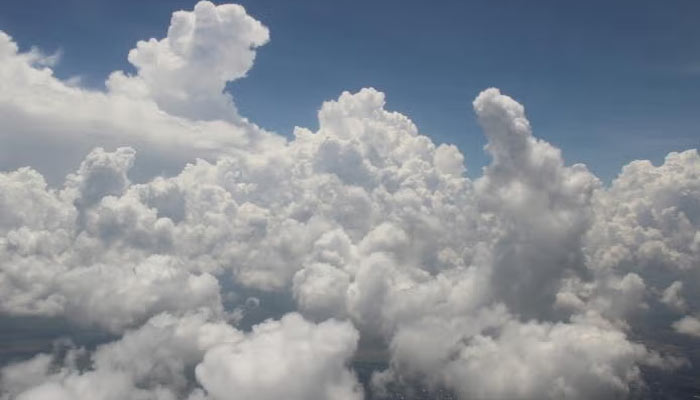
Clouds Are Changing—and That’s Making Global Warming Worse.
Clouds cover about two-thirds of Earth at any given time. They’re not just part of the weather—they play a key role in keeping the planet cool by reflecting sunlight back into space. But now, due to global warming, clouds themselves are changing—and that change is adding even more heat to the planet.
What’s Going On?
As humans burn fossil fuels, greenhouse gases rise, trapping heat in the atmosphere. That’s the main driver of global warming. But recent research led by NASA’s Goddard Institute for Space Studies reveals that cloud patterns are shifting, and the effect is stronger than expected.
In short: the clouds that reflect the most sunlight are disappearing, and the ones that reflect less are spreading. That means more sunlight is reaching Earth’s surface, leading to even more warming.
Reflective vs. Broken Clouds
Not all clouds are equal. Thick, bright clouds—especially those near the equator—reflect lots of sunlight. But thin, scattered clouds reflect far less. The new study shows that:
Bright cloud zones are shrinking—especially near the equator and mid-latitudes.
Regions with thin, broken clouds—like the subtropical zones—are growing.
This shift allows more solar energy to reach Earth, where it’s absorbed and converted into heat.
A Climate Feedback Loop
These changes are being driven by shifts in Earth’s global wind systems, which are themselves being altered by climate change. As warming changes wind patterns, clouds shift position—creating a feedback loop:
- Warming changes winds.
- Winds change cloud coverage.
- Less reflective clouds let in more sunlight.
- More sunlight causes more warming.
This is called a positive feedback loop—a process that intensifies itself.
What It Means
This feedback may help explain why Earth has been warming faster than some climate models predicted in recent years. While changes in cloud brightness due to pollution also play a role, the study found that changing cloud area has a much greater effect.
NASA and other agencies are continuing to monitor these changes with satellite data to better understand how cloud feedbacks could shape the future of our climate.
Comments are closed.