
Won’t Tolerate Impediments’: SC Cautions Bengal on SIR, Grants One-Week Extension

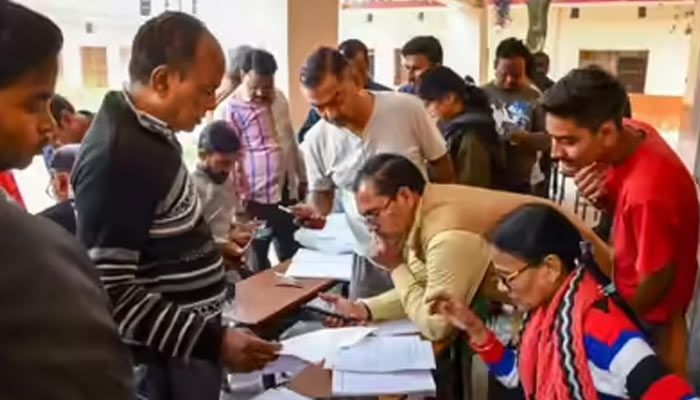
The Supreme Court on Monday cautioned the West Bengal government against creating any “impediments” in the completion of the Special Intensive Revision (SIR) of electoral rolls.
While assuring that genuine difficulties faced during the process would be addressed. The court also extended by one week the deadline to complete scrutiny of applications and finalise data under the Bengal SIR exercise.
Chief Justice of India Surya Kant made the court’s position unambiguous, stating, “We will remove hurdles, but we will not create any impediments in the completion of SIR. Let us be very clear about it.” The bench, also comprising Justices Joymalya Bagchi and N V Anjaria, emphasised that the revision exercise must proceed as scheduled.
The observations came amid objections raised by the West Bengal government over the manner in which the Election Commission of India (ECI) is conducting the SIR. Chief Minister Mamata Banerjee has sought changes in the process, including a complete halt to official instructions being issued through WhatsApp. The state has demanded that all directions be formally issued, uploaded on the ECI website, and accompanied by proper memo numbers and dates. It has also sought the removal of micro observers, proposing the deployment of 8,505 Group B officers instead.
Concerns over ERO appointments
Senior advocate D S Naidu, appearing for the Election Commission, raised serious concerns over the appointment of Electoral Registration Officers (EROs), arguing that the post involves quasi-judicial functions requiring adjudicatory experience.
Naidu submitted that while the ECI had sought around 300 Group B officers with suitable experience, only 64 such officers were provided, with the remaining appointments made on the basis of pay parity rather than expertise. He argued that officers such as engineers were ill-equipped to handle adjudicatory decisions under the SIR, which are subject to appeal.
Micro observers under scrutiny
The role of micro observers also came under scrutiny during the hearing. Senior advocate Shyam Divan cautioned against large-scale deletion of voter names through micro observers, warning of the risk of mass exclusion.
Highlighting the urgency, Divan pointed out that the SIR process is scheduled to conclude on February 14, with the final electoral roll to be published the same day. “If they publish the final list and announce election, then it will be finished. We don’t want mass exclusion,” he said.
Divan informed the court that the draft electoral roll contains 7.08 crore voters, of which 6.75 crore have been mapped, around 32 lakh remain unmapped, and 1.36 crore fall under the “logical discrepancy” category. He added that more than half of these discrepancies arise from minor spelling variations in surnames such as “Dutta” and “Datta” or “Roy” and “Ray”.
Responding, the CJI clarified that micro observers form part of a support mechanism and that final decision-making authority rests solely with EROs. “We will see after the verification how many of these notices are dropped. If 80% are dropped, your argument will remain the same — that minor discrepancies are incorrect,” he observed.
State’s objections
Senior advocate Abhishek Manu Singhvi, appearing for the West Bengal government, objected to the deputation of micro observers from outside the state, arguing that many lacked familiarity with local conditions, language, and culture. He submitted that the state had already deployed trained personnel, including over 80,000 Booth Level Officers and thousands of Group B officers, to assist in the revision exercise.
The court also noted procedural lapses in the deputation of officers. The CJI stressed that complete details and proper nomenclature were required for effective coordination with district authorities, adding that similar directions had earlier been issued in a Bihar-related matter.
Interim directions issued
To streamline and enhance transparency in the SIR process, the Supreme Court issued a set of interim directions. It directed the West Bengal government to ensure that the list of 8,555 Group B officers submitted be reported to the respective District Election Officers by 5 pm.
The court authorised the ECI to replace existing EROs or Assistant EROs or utilise the services of these officers, if found suitable. After brief scrutiny of their biodata, the officers may be given one or two days’ training to function as micro observers. The bench reiterated that these officers would only assist EROs, with final authority resting exclusively with the EROs.
The court also directed the West Bengal Director General of Police to file a personal affidavit responding to allegations of police inaction during incidents involving violence and the burning of Form 7s.
What Mamata Banerjee sought
Mamata Banerjee has questioned the transparency of the SIR process, repeatedly criticising what she described as the “WhatsApp Commission”. The state has sought the complete removal of micro observers, proposing that decisions in disputed cases rest solely with EROs or Assistant EROs. Alternatively, objections raised by micro observers should be referred back to statutory officers.
The Trinamool Congress has also warned against deletion of voters over minor name mismatches, sought acceptance of residence certificates earlier rejected, and urged that house allotment sanction letters be treated as valid proof, as was done during the Bihar revision exercise.
On February 4, Banerjee became the first serving chief minister to personally argue before the Supreme Court, urging it to intervene to “save democracy” and alleging that West Bengal was being targeted. The top court subsequently issued notices to the ECI and the state’s chief electoral officer, seeking their responses by February 9.
Comments are closed.