
World may experience 57 additional scorching days each year by 2100: Study

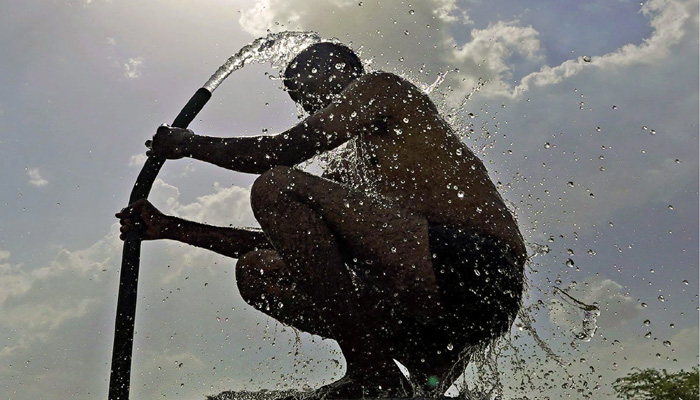
A new study warns that by 2100, the world could face nearly two additional months of dangerously hot “superhot” days each year, with smaller, poorer nations bearing the brunt far more than major carbon-emitting countries.
Researchers from World Weather Attribution and Climate Central used climate simulations to measure the impact of global efforts, including the Paris Agreement, on extreme heat. Without these measures, the world would be on track for 114 extra superhot days annually. Current commitments are expected to limit this to 57 additional days under a 2.6°C warming scenario by the end of the century. If emissions continue unchecked, leading to 4°C warming, the number of extra superhot days could nearly double.
Superhot days are defined as those hotter than 90% of comparable days between 1991 and 2020. Since 2015, the world has already added an average of 11 superhot days. Such extreme heat is linked to increased hospitalisations and deaths, potentially affecting tens of thousands to millions of people each year.
The study highlights recent trends: the 2023 southern Europe heat wave is now 70% more likely and 0.6°C hotter than it would have been a decade ago. Future heat waves could be far more severe, with temperatures rising by up to 3°C in Europe and 1.7°C in parts of the US and Mexico under current emission trends.
The findings also reveal stark inequalities in climate impacts. Small island and low-lying nations such as the Solomon Islands, Samoa, Panama, and Indonesia are projected to see the largest increases, with Panama facing 149 extra superhot days despite contributing just 1% of global emissions. Meanwhile, major polluters like the US, China, and India, responsible for 42% of emissions, are expected to see only 23–30 extra superhot days.
Experts warn that even with current mitigation efforts, billions of people face a dangerous future. “Global warming is driving yet another wedge between have and have-not nations; this will ultimately sow seeds of further geopolitical instability,” said climate scientist Andrew Weaver. Johan Rockstrom of the Potsdam Climate Institute added that limiting warming below 4°C is still far from enough to avoid catastrophic impacts.
The study underscores the urgent need for stronger climate action and global cooperation, not only to reduce the total number of superhot days but also to address the disproportionate burden on vulnerable nations.
Comments are closed.