
13 Crore Names Missing From Draft Rolls, EC Orders Fresh Drive for ‘Left-Out’ Voters

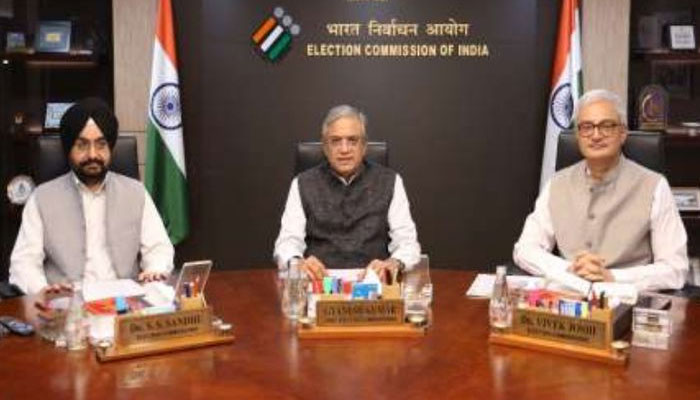
EC Orders Fresh Drive to Restore Voters Left Out After SIR
Amid mounting scrutiny over the scale of voter deletions during the nationwide Special Intensive Revision (SIR), the Election Commission of India (ECI) has directed 20 states and Union Territories where the exercise has concluded to launch a special drive to identify and enrol eligible voters who may have been left out.
The direction was issued to state Chief Electoral Officers (CEOs) in writing on September 29 and reiterated during a video conference with all CEOs on Thursday.
The move comes after around 13 crore names were excluded from draft electoral rolls across 30 states and Union Territories. It also follows questions raised within the Commission over how electoral rolls were being prepared and who could be excluded from them.
An investigation by The Indian Express published on September 23 reported that Election Commissioners Sukhbir Singh Sandhu and Vivek Joshi had recorded objections on 14 occasions over 10 months to decisions taken in the Commission’s name without their knowledge. Their concerns included changes to Form 6, used by new voters to register, and the centralised control of ECINet, the software platform used for electoral-roll management.
Deleted Voters to Be Traced
The September 29 communication instructed states and UTs where SIR has been completed to conduct a special enrolment campaign for “left out” voters as well as young and first-time eligible electors.
The exercise will be conducted through continuous updation using the statutory Form 6.
The form to be used outside the SIR period will not carry the additional declaration introduced in July. That declaration required applicants to state whether they or their parents were included in the electoral roll following the previous SIR.
The additional requirement had raised concerns in cases involving first-time voters whose parents’ names had themselves been deleted. The September 29 order makes clear that the declaration will apply only during the SIR phase. Once the exercise is over, the forms prescribed under the Registration of Electors Rules, 1960, will apply.
During Thursday’s meeting, the Commission also asked CEOs to compare electoral rolls prepared before and after SIR and identify people whose names had been deleted.
Officials were told to determine whether any of those voters had been inadvertently left out. In particular, house visits have been ordered where a voter was neither mapped to another roll nor identified as a duplicate or deceased.
The field teams have been asked to contact such voters and help eligible persons submit Form 6. State election authorities have also been asked to involve political parties and their booth-level agents in the exercise.
Goa Case Raises ECINet Questions
The issue has already surfaced in Goa, where 97 voters were left out of the final electoral roll despite being found eligible by the state’s own Electoral Registration Officers (EROs).
The voters had been deleted at the draft stage but subsequently submitted documents and were cleared by the EROs. However, officials found that ECINet did not provide an option to reverse the deletion.
The Goa CEO’s office sent eight communications to the Commission over seven days seeking a resolution, with DG (IT) Seema Khanna copied on the correspondence. The final roll was published without the 97 names.
The episode echoed concerns raised by Sandhu in an August 14 note. He pointed out that the law assigns responsibility for electoral rolls to EROs, District Election Officers and CEOs, while access to the database had been centralised under the DG (IT).
Sandhu questioned the authority to restrict the statutory officers’ access and ability to operate the electoral-roll system.
Joshi had raised a similar concern in May, describing the process as the “gradual centralisation of the electoral roll database” and calling for an audit.
Commission Orders Changes to ECINet
The latest directive follows the ECI’s September 26 meeting, its second full meeting since April.
The Commission decided that voters who receive notices because they are “unmapped” or have “logical discrepancies” would generally not be required to appear personally for hearings.
Instead, BLOs will visit their homes, collect documents and upload them for consideration by the ERO. Those who had already received hearing notices are to be informed by phone or WhatsApp that they do not need to appear in person.
The ECI also decided to form a committee that will include an independent IIT/IIIT expert to review ECINet. It said additional flexibility required by field officials would also be incorporated into the system.
The September 29 communication conveyed these decisions to the states and was copied to the DG (IT) for the required changes in ECINet.
Maharashtra Tightens Safeguards
In Maharashtra, where SIR is still underway and which is currently the largest state undergoing the exercise, the Chief Electoral Officer’s office has cautioned EROs against hurried deletions.
A note issued Thursday to officials in Mumbai City and Mumbai Suburban districts directed them to provide voters sufficient opportunity to submit documents, conduct hearings and pass appropriate orders before excluding a name.
It specifically stated that an eligible voter should not remain outside the electoral roll and that there should be no obstruction to the person’s right to vote.
The directions require complete scrutiny at the ERO level and caution officials against taking negative decisions without adequate verification.
Maharashtra’s draft roll had flagged 1.22 crore records for verification. This included 62.48 lakh cases involving discrepancies in relatives’ details and another 59.75 lakh voters who could not be mapped to a relative in the previous electoral roll.
Special camps have been scheduled for October 3, 4, 10 and 11.
Under the new procedure, BLOs will collect documents from voters at their homes. If a case remains unresolved after the BLO’s visit, the voter will receive another opportunity to submit documents, followed by a hearing and a formal order before any name is removed.
The state note said changes required in ECINet and the BLO App were still being implemented by the Commission.
Comments are closed.