
Air India Pilots Recreate Suspected Dual Engine Failure in Simulator After Crash

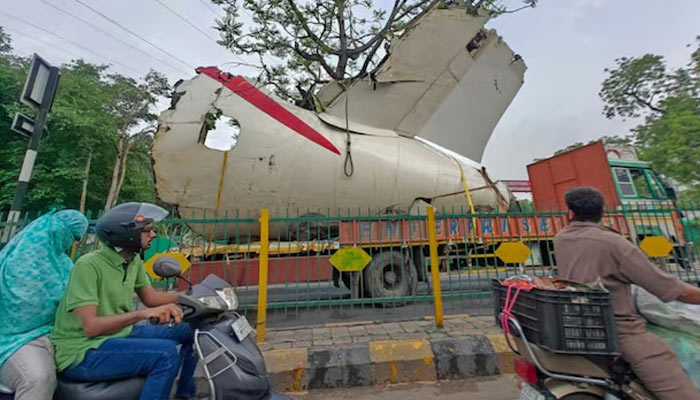
Air India Crash: Simulated Flight Suggests Possible Dual Engine Failure as Investigators Probe Cause.
More than two weeks after the deadly Air India crash that claimed 241 lives, investigators are narrowing their focus on a possible dual engine failure as a leading cause behind the Boeing 787 Dreamliner’s inability to stay airborne.
In an effort to better understand the aircraft’s final moments, Air India pilots conducted a simulator reenactment using the same flight parameters—gear deployed and flaps retracted—as observed in the crashed aircraft. According to sources familiar with the investigation, the simulation alone did not result in a crash, suggesting that another factor, potentially a serious technical failure, may have played a key role.
The simulator test was conducted independently from the official probe by the Aircraft Accident Investigation Bureau (AAIB). It was aimed at exploring plausible scenarios based on flight data and visual evidence.
Focus Shifts to Technical Malfunction
Reinforcing the suspicion of a technical fault is the earlier discovery that the aircraft’s emergency Ram Air Turbine (RAT) deployed seconds before impact—a system that activates only during complete electrical or hydraulic failure. The turbine provides limited backup power but is not capable of maintaining flight.
The crashed aircraft, a Boeing 787 Dreamliner powered by two General Electric engines, went down shortly after takeoff from Ahmedabad on June 12. Eyewitness video and initial data show the plane struggling to gain altitude before plummeting and exploding on impact.
Boeing and GE have declined to comment, citing the ongoing investigation. The AAIB and Air India have not issued official updates.
Engine Power Loss Under Scrutiny
Whether both engines failed simultaneously—and why—remains a central question. Investigators are currently analyzing the recovered flight data and cockpit voice recorders. Experts say that signs point to a potential electrical or hydraulic failure that might have originated from a loss of engine power.
For example, pilots reviewing video evidence observed that while the aircraft’s landing gear appeared to have started retracting, the gear doors never opened—possibly indicating hydraulic system failure. The engines’ control systems, known as FADEC (Full Authority Digital Engine Control), are designed to monitor and regulate engine performance. A malfunction in this system could critically impair aircraft control.
Analysis of the wreckage further revealed that the wing flaps and slats—key for lift during takeoff—were extended properly, ruling out deployment errors as a cause.
Only 15 Seconds to Impact
According to sources, the cockpit crew sent out a Mayday distress call moments after takeoff. There were only around 15 seconds between the emergency call and the aircraft’s fatal descent—leaving virtually no time for recovery.
Support teams from Boeing and the US National Transportation Safety Board (NTSB) are assisting the investigation. However, it remains unclear when the AAIB will release a comprehensive report based on the flight recorders, which hold crucial data on the plane’s performance and cockpit communications.
This crash is the deadliest in Indian civil aviation in decades and marks the first-ever fatal accident involving a Boeing 787 Dreamliner.
Comments are closed.